Lawn Care Basics
Dethatching: When Your Lawn Needs It and How to Do It
Learn what lawn thatch is, how to measure it, and when and how to dethatch using a rake or power machine for a healthier lawn.
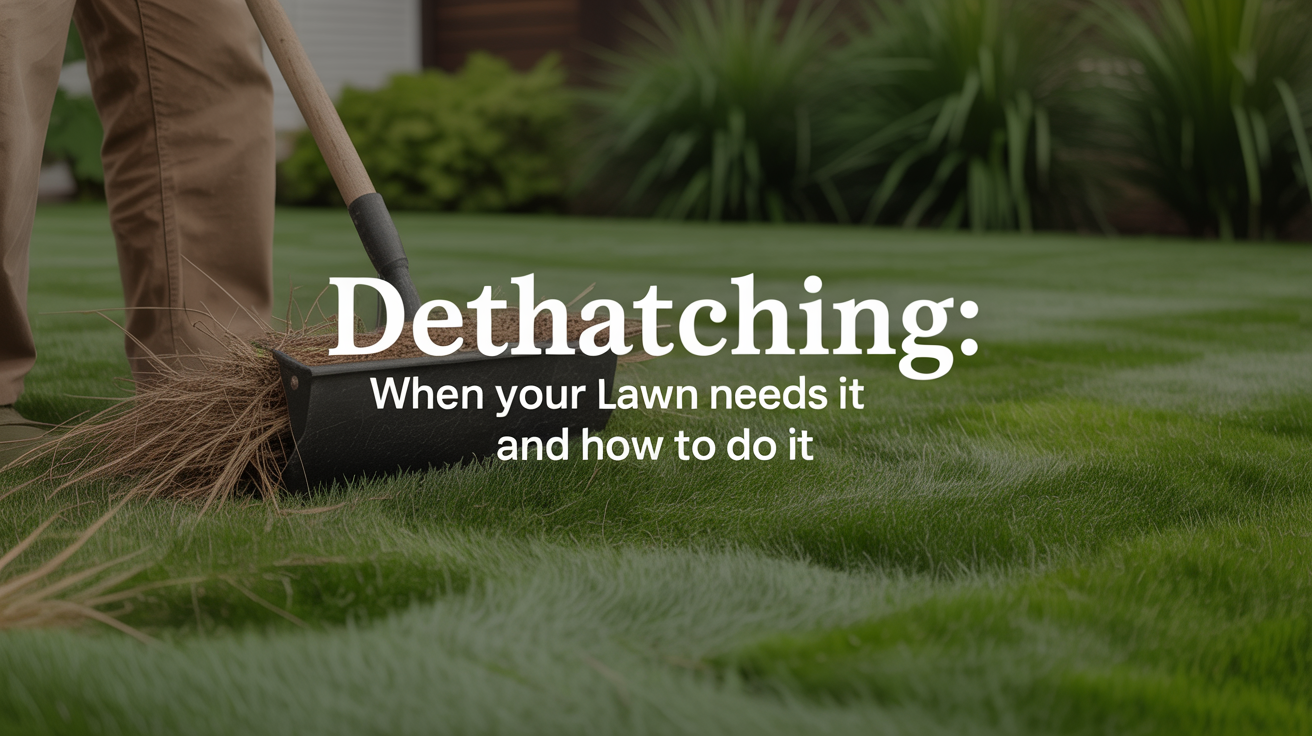
Thatch is the spongy mat of dead stems, roots, and grass clippings that collects between your living grass blades and the soil surface. A thin layer (under half an inch) is actually harmless, it moderates soil temperature and holds a little moisture. Once it thickens past that point, though, it starts working against the lawn: water beads off or pools on top instead of soaking in, fertilizer never reaches the root zone, and the grass crown sits in a constantly damp environment that invites disease and shallow rooting. Dethatching removes that excess layer, and timing it during active growth gives the grass the best chance to bounce back quickly.
What Thatch Is and Why It Builds Up
Thatch is mostly lignin-rich plant tissue, crowns, stolons, rhizomes, and the lower parts of grass stems. The confusion people run into is that grass clippings are often blamed for thatch, but clippings decompose quickly and are a minor contributor. The real culprit is slow decomposition of the tougher structural parts of the plant.
Several factors speed up thatch accumulation:
- Grass variety. Aggressive spreading grasses like Kentucky bluegrass, Bermuda, and zoysiagrass produce a lot of stolons and rhizomes and are heavy thatch producers. Tall fescue and perennial ryegrass thatch much more slowly.
- Soil biology. Healthy, active soil microbes break down organic matter. Compacted, acidic, or heavily fertilized soils can suppress microbial activity, letting organic debris pile up faster than it decomposes.
- Excessive nitrogen. Pushing the lawn with high nitrogen fertilizer produces rapid top growth, but the plant produces structural tissue faster than the soil can process it.
- Pesticide overuse. Broad-spectrum pesticide applications can reduce earthworm populations and soil fungi, both of which help break down organic matter.
- Infrequent mowing. Cutting off more than a third of the blade at once leaves heavier material on the surface. The guidance in our mowing height guide applies here: keeping the blade at the right height and mowing often enough reduces the volume of material shed at each pass.
How to Measure Thatch and Decide Whether to Act
You don't need special equipment to check thatch depth. Use a sharp knife or spade to cut a small plug of grass a few inches deep, then pull it out and look at the cross-section. The thatch layer is the brownish spongy zone between the green blades and the tan soil. Measure it with a ruler.
Under 1/2 inch: leave it alone. This level provides some benefit and doesn't impede water or air movement meaningfully.
1/2 to 3/4 inch: borderline. If the lawn is growing well and draining fine, you may be able to hold off. If you're noticing water runoff during irrigation or the grass feels unusually spongy underfoot, this is the time to act.
Over 3/4 inch: dethatch. At this depth the lawn is almost certainly stressed even if it looks green on the surface. You may also be overwatering without realizing it because the water isn't penetrating. Consistent deep watering (discussed in this watering guide) only works if the thatch isn't blocking the path to the roots.
Dethatching Rake vs. Power Machine
The right tool depends on the size of the lawn and the severity of the problem.
Thatch rake (manual): A thatch rake has sharp, curved tines designed to slice into the mat and pull it upward. It works well on small lawns (under 2,000 sq ft) with moderate thatch. It's slow going on larger areas, and if the thatch is thick or compacted it becomes exhausting and often incomplete. Thatch rakes cost $30–60 and are reusable indefinitely, making them a practical choice for occasional light maintenance.
Power dethatcher (electric or gas): Also called a vertical mower or verticutter, this machine drives rotating blades vertically into the turf at set intervals (typically 1 to 3 inches apart), slicing through thatch and pulling it to the surface. A gas-powered unit handles even heavily thatched lawns in a single pass. You can rent one at most equipment rental shops for $60–100 per day, which makes more sense than buying if you only need it once every few years.
When a power dethatcher is the only real option:
- Lawn over 2,000 sq ft with thatch deeper than 3/4 inch
- Warm-season grasses like Bermuda or zoysia that spread aggressively and mat densely
- Any situation where the manual rake isn't pulling material up after a full pass
After a power dethatching pass the lawn will look rough, thin, raked-over, with piles of debris across it. That's expected. The recovery happens over the following two to four weeks if timing is right.
When to Dethatch (Timing by Grass Type)
Timing is the part that trips people up most often. The principle is straightforward: dethatch when the grass is actively growing and can regenerate, not when it's stressed or dormant.
Cool-season grasses (tall fescue, Kentucky bluegrass, perennial ryegrass): Dethatch in early fall (late August through September in most climates). The grass is coming out of summer heat stress and has six to eight weeks of active growth ahead before the first hard frost. Spring is a secondary option, but fall is better because weed competition is lower and the soil is still warm. Avoid late spring or summer, when cool-season lawns slow down and can't recover well.
Warm-season grasses (Bermuda, zoysia, centipede, St. Augustine): Dethatch in late spring to early summer, once the grass has fully greened up and nighttime temperatures are consistently above 60°F. These grasses are entering their peak growth window and will fill back in quickly. Dethatching in fall or winter, when warm-season grasses are dormant or going dormant, causes damage that can persist until the following season.
The month-by-month lawn care calendar maps out these windows alongside other tasks like aeration and overseeding, which pair well with dethatching.
How to Dethatch a Lawn: The Process
Before you start:
- Mow the lawn to about half its normal height the day before. This gives the tines or blades better access to the thatch layer.
- Water lightly if the soil is bone dry. The ground should be moist but not soft.
- Mark any irrigation heads, shallow cables, or lawn edging that could catch a machine blade.
Running the dethatcher:
- Set the blade depth so the tines just reach the soil surface. Too shallow and you miss thatch; too deep and you damage roots.
- Make one pass in a single direction, overlapping rows slightly.
- For heavy thatch, make a second pass perpendicular to the first.
- Rake up all the debris and compost it or bag it for yard waste collection. Leaving the pulled-up thatch on the lawn just redeposits it.
After dethatching:
- This is an ideal moment to overseed bare or thin spots, because the soil is open and seed can make good contact.
- Apply a balanced fertilizer appropriate to the season to support recovery.
- Water consistently for two to three weeks to help the grass re-establish. Deep, infrequent watering works better than daily shallow sprinkles.
The lawn will look stressed for a week or two. Avoid heavy foot traffic during that window.
Frequently Asked Questions
How often should I dethatch my lawn?
Most lawns need dethatching every two to three years, not annually. Over-dethatching stresses the turf unnecessarily. If you're measuring thatch depth regularly (once a year is plenty) and keeping it under half an inch through good cultural practices, you may go four or five years between sessions.
Can I dethatch and aerate at the same time?
Yes, and for many lawns it makes sense to do both in the same fall or spring session. Aeration (core aeration specifically) improves the conditions for soil microbes and helps the lawn recover faster after dethatching. If you're renting equipment, line up both rentals for the same weekend.
Will dethatching kill my lawn?
It won't kill a healthy lawn, but it does cause temporary visible stress, especially with a power machine. The grass will look thinned and rough for a week or two. As long as the timing is right (active growing season, not drought or heat stress) and you follow up with water and fertilizer, the lawn recovers fully.
Is thatch the same as dead grass?
Not exactly. Thatch is composed of partially decomposed stems, crowns, and roots, organic tissue that hasn't broken down yet. It's distinct from surface dead grass blades, which decompose much faster. If you see a brown layer between the green blades and the soil on a cross-section plug, that's thatch, regardless of whether the surface grass looks dead or green.
Can I prevent thatch from building up in the first place?
Partly. Core aeration once or twice a year, keeping soil pH in the right range for your grass type (generally 6.0–7.0), avoiding excessive nitrogen, and not over-applying pesticides all support the soil biology that breaks thatch down naturally. Some grass varieties simply produce more thatch than others, so there's a genetic component you can't fully control. Good management keeps the accumulation slow enough that dethatching is a periodic maintenance task rather than an emergency rescue.