Lawn Care Basics
How to Aerate a Compacted Lawn
Learn how to aerate a compacted lawn with core aeration: when to do it, how deep to go, and what to do after to get thicker, healthier grass.
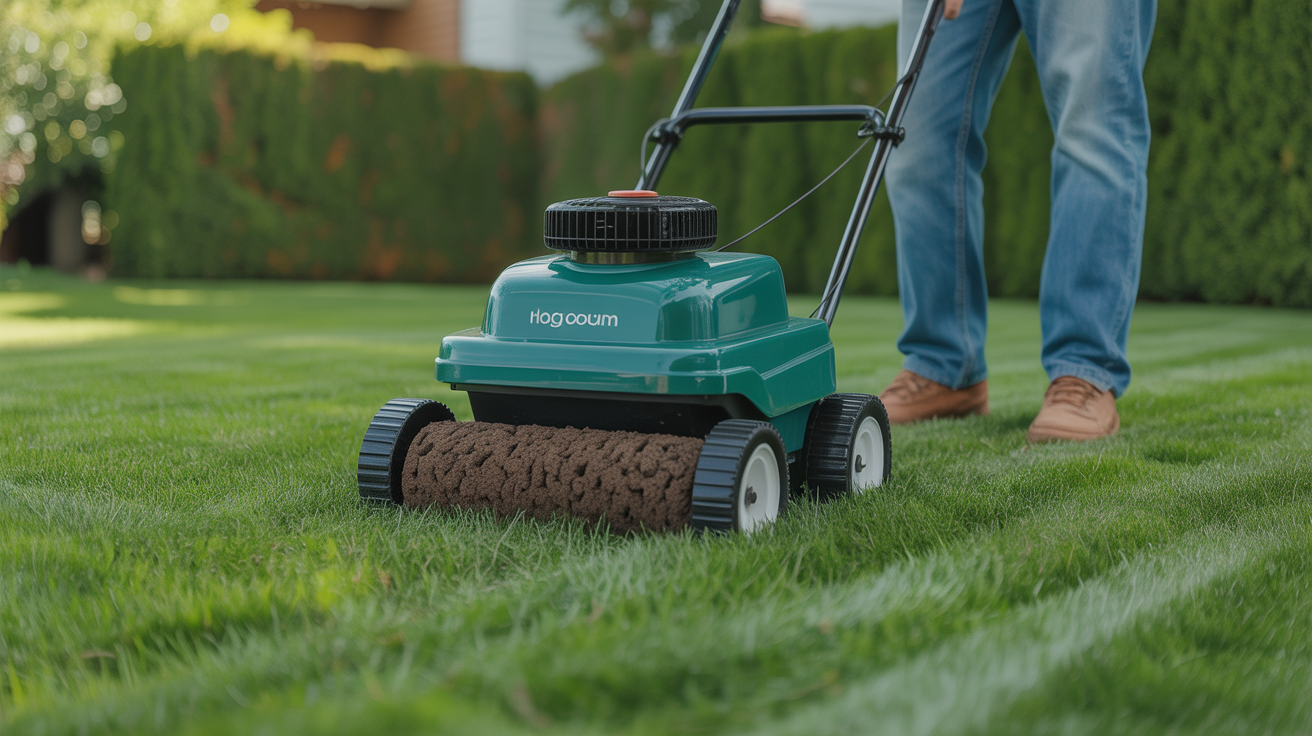
Aeration solves a problem that fertilizer and irrigation alone cannot: soil so compacted that grass roots can barely grow. A core aerator pulls cylindrical plugs of soil out of the ground, typically 2 to 4 inches deep and about 3/4 inch in diameter, spaced 2 to 6 inches apart across the lawn. Those holes let air, water, and nutrients move freely to the root zone again. Done at the right time of year, one aeration pass can transform a tired, thinning lawn into something that actually feels good to walk on.
Signs Your Lawn Needs Aeration
Not every lawn needs annual aeration. A few telling signs mean it's time:
Water pools after rain or irrigation. If puddles sit for more than 30 minutes on a flat section of lawn, the soil has lost its ability to absorb water at a reasonable rate. Compaction is the most common cause.
The soil feels like concrete. Push a screwdriver into your lawn. If you can't push it 2 inches deep without real effort, the soil is too dense for healthy root growth.
Thatch exceeds half an inch. Thatch is the layer of dead organic matter between the soil surface and the grass blades. A little thatch is fine; more than about half an inch prevents water and air from reaching roots. Core aeration helps break it down by pulling plugs up through it and depositing soil microbes on top.
The lawn gets heavy foot traffic. Play areas, paths kids cut across the yard, parking on grass after rain, even repeated mowing on wet ground, all pack soil particles together. Clay soils compact faster than sandy or loamy ones.
Grass looks thin or stressed despite regular care. If you're watering correctly and mowing at the right height but the lawn still looks pale and sparse, compaction is worth investigating.
Core Aeration vs. Spike Aeration
The tool you use matters. There are two main types of aerators:
Core (plug) aerators remove actual cylinders of soil from the ground, leaving behind holes and a scattering of plugs across the lawn surface. This is the method that delivers real results. The holes close back in over two to four weeks as the lawn grows, but while they're open they allow oxygen and water to penetrate and give roots room to expand.
Spike aerators (solid tines, spiked shoes, hand-pushed rollers) just poke holes without removing any material. They don't relieve compaction; in fact, they can worsen it slightly by pushing soil particles sideways and down. Spike tools are popular because they're cheap and easy to use, but the lawn research literature is pretty consistent: core aeration outperforms spike aeration in every measurable outcome, from root depth to turf density.
Rent a walk-behind core aerator from a hardware store or equipment rental yard if you don't own one. For a typical suburban lawn, you'll spend a couple of hours and save well over what a lawn service would charge for the same job.
When to Aerate Your Lawn
Timing is tied directly to grass type, because you want to aerate when the grass is in active growth and can recover quickly.
Cool-season grasses (Kentucky bluegrass, tall fescue, perennial ryegrass) grow most vigorously in fall and spring. Early fall, roughly late August through October depending on your region, is the best window. The soil is still warm enough for recovery, weed pressure drops as temperatures cool, and fall aeration pairs well with overseeding. Spring aeration (March to May) is a secondary option, but fall is preferable because you won't be opening up a seedbed for crabgrass and other summer weeds.
Warm-season grasses (bermudagrass, zoysia, centipede, St. Augustine) peak in late spring and summer. Aerate from late spring through early summer, once the grass has fully greened up and active growth is underway. Aerating a warm-season lawn in fall, when it's heading toward dormancy, sets it up for stress and slow recovery.
Local climate adds nuance. A homeowner in coastal Oregon has different fall timing than someone in interior New England, even with the same grass species. Use your grass's active growth period as the guide, not a fixed calendar date.
If you plan to overseed, do it immediately after aeration. The open holes are ideal germination spots: the seed makes direct soil contact, and the disrupted thatch layer is less likely to intercept water before it reaches the seed.
How to Aerate Your Lawn
Before you start:
- Mark all irrigation heads, shallow utility lines, and any buried obstacles. Core aerators hit them hard.
- Mow the lawn to its normal height. There's no need to scalp it.
- Water the lawn one to two days before. Moist (not saturated) soil cores out cleanly; bone-dry soil resists the tines and produces shallow, inconsistent holes. If it rains the night before, check that the ground drains well enough that you won't be aerating soggy turf.
Running the aerator:
Make a first pass across the lawn, then a second pass perpendicular to the first. Two passes produce holes every 2 to 3 inches in both directions, which is the target density for heavily compacted lawns. One pass is enough for maintenance aeration on a lawn that's in reasonably good shape.
Don't try to collect the plugs. Leave them on the surface. They'll break down in one to three weeks with mowing and rain, and they return the soil microbes and organic matter to the top of the thatch layer, which accelerates decomposition.
After aeration:
- Topdress with compost if your soil is low in organic matter. A thin layer, no more than a quarter to half an inch, brushed into the holes improves soil structure over time.
- If overseeding, broadcast seed immediately, then water lightly twice daily until germination, usually 7 to 21 days depending on species and temperature.
- Resume your normal mowing routine once the plugs have broken down, typically within two to three weeks.
- Hold off on pre-emergent herbicides for at least 60 days if you've overseeded; they'll prevent germination.
- Water more deeply than usual for the first week or two to help roots take advantage of the new channels.
Annual aeration is appropriate for lawns under heavy use or with clay soil. Lighter soils with moderate foot traffic may need it only every two to three years. A simple soil-probe check in late summer will tell you whether compaction has returned.
Frequently Asked Questions
How deep should core aeration go?
A quality core aerator pulls plugs 2 to 4 inches deep. Shallower than 2 inches barely reaches the compacted zone where roots struggle. Heavier aerators with longer tines do better in firm clay soils; lighter machines may only reach 2 inches in hard ground, which is why pre-watering matters.
Can I aerate a new lawn?
Wait at least one full growing season before aerating a lawn seeded from scratch. Newly germinated grass has shallow, fragile roots that a core aerator will tear up. Sod can typically handle aeration after about a year, once it's knitted into the soil beneath.
Is one aeration pass enough?
For most lawns, yes. If compaction is severe (think a former construction site or a section that's been parked on repeatedly), two passes in different directions will produce denser hole coverage and faster relief. After the first season of improvement, one pass per year is usually sufficient to maintain it.
Will aeration kill my grass?
No. It stresses the lawn less than a stressful mowing or a heat wave. The plugs left on the surface look messy for a couple of weeks, which surprises some homeowners, but the grass fills back in from the surrounding turf and the holes close naturally. Avoid aerating during drought stress or when grass is dormant, since recovery will be slow.
Does aeration help with drainage problems?
It helps with compaction-caused drainage problems, yes. If water sits on your lawn because the soil is too dense to absorb it, aeration will make a noticeable difference. If poor drainage is due to grade issues (the ground slopes toward the house) or a high water table, aeration alone won't fix it, but it can still improve the overall health of the turf by reducing root stress.