Seeding & Sod
How to Repair a Patchy Lawn With Seed
Learn how to do lawn patch repair the right way: scratch the soil, pick matching seed, water consistently, and get bare spots growing again in a few weeks.
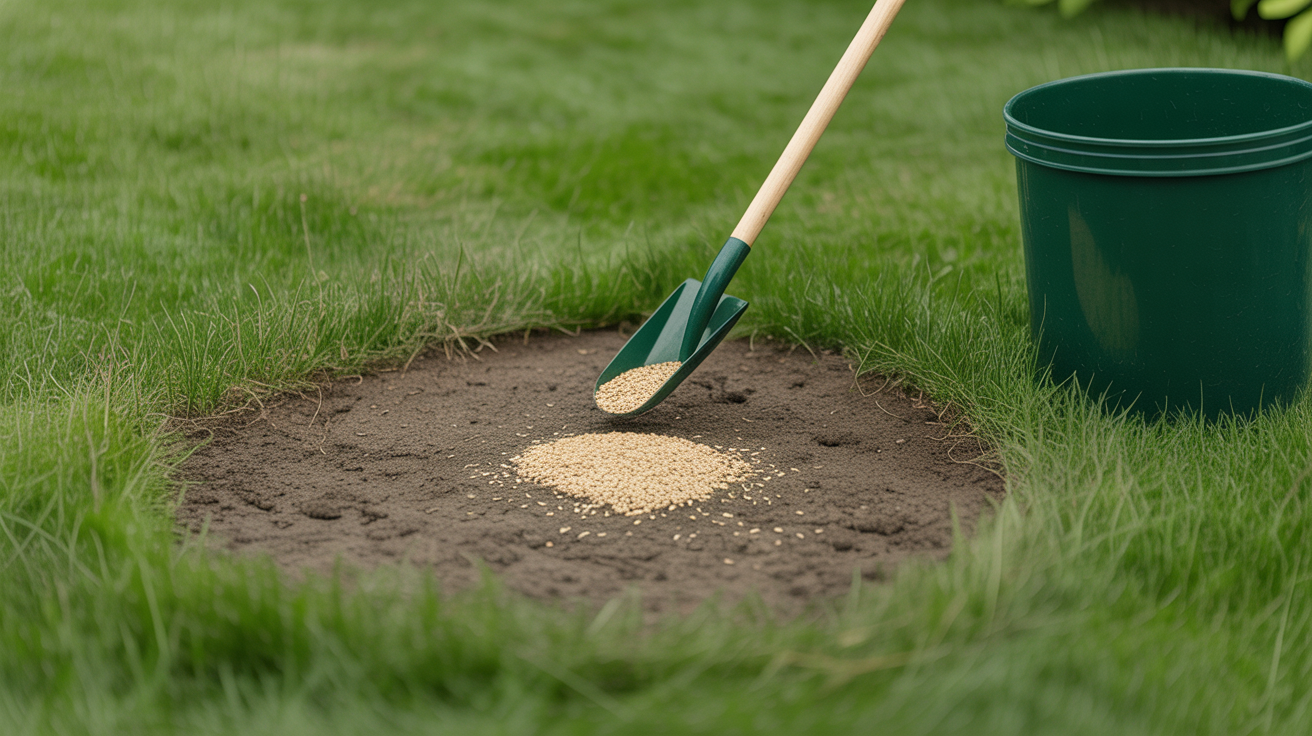
Bare patches happen to almost every lawn. Dog traffic, a dry summer, a spilled bag of fertilizer, or a grub infestation can all leave you staring at a brown circle where turf should be. The good news is that patch repair seed is inexpensive, the technique is straightforward, and a few weeks of steady watering usually closes the gap.
This guide walks through the whole process, from diagnosing why the patch exists to getting new seedlings established without losing them to the first dry spell.
Find the Cause Before You Reseed
Throwing seed on a bare spot without addressing what killed the grass there is a common mistake. The new seedlings will likely fail for the same reason the original grass did.
A few common culprits:
- Compacted soil. High-traffic areas, especially around gates, paths, and play equipment, get packed down so hard that roots cannot establish. You can confirm this by poking a screwdriver into the soil. If it barely goes in, compaction is part of the problem.
- Shade. If a tree or structure has grown to shade an area more than it used to, the grass mix you planted may no longer be suitable. Most turf grasses need several hours of direct sun each day.
- Grubs or insects. If the turf pulls away like a loose carpet and you see white C-shaped grubs in the soil beneath, treat for grubs before reseeding. Reseeding over an active infestation wastes both time and seed.
- Spills and chemical burns. Gasoline, fertilizer concentrate, or pet urine in high doses all kill grass. Flush the area well before seeding.
- Thatch buildup. A thick thatch layer prevents seed-to-soil contact. Scratch it out before doing anything else.
Once you know why the patch is bare, address that issue first. Then proceed.
Pick the Right Seed for the Patch
Matching your new seed to the existing lawn matters a lot. A patch that germinates in a visibly different color, texture, or growth rate will stand out for years.
The first question is whether you have a cool-season or warm-season lawn. Cool-season grasses like Kentucky bluegrass, tall fescue, and perennial ryegrass thrive in the northern half of the country and perform best when seeded in late summer or early fall. Warm-season grasses like Bermuda, zoysia, and centipede are dominant in the South and prefer late spring into early summer seeding, when soil temperatures are reliably above 65°F.
For the patch itself, look for a seed blend that matches what you already have. If you have leftover seed from when you first planted the lawn, use that. If not, check the existing turf. Turf grasses have distinct leaf widths, growth habits, and textures. Take a photo or pull a few blades and bring them to a local garden center to help identify what you have.
Timing matters. Cool-season seeding windows generally fall around late August through mid-October in most northern climates. Warm-season windows are spring through early summer. Reseeding outside the appropriate window means slow germination, weak establishment, or outright failure. If you are reading this after the best window has passed, consider holding off until conditions are right rather than forcing it.
Prepare the Soil Properly
Seed needs good contact with loose, moisture-retaining soil to germinate reliably. Bare ground that has baked in the sun and packed over time does not give seeds much to work with.
Step-by-step soil prep for a patch:
- Use a hard rake or hand cultivator to scratch the surface to a depth of about 1 inch. You are not digging a garden bed, just loosening the top layer.
- Remove dead grass, thatch, and debris. The goal is exposed mineral soil where seeds can settle in.
- If the soil is particularly compacted, work in a light layer of compost or topsoil, raked level. A thin topdressing, no more than a quarter inch, can improve both moisture retention and seed-to-soil contact.
- Level the area so it sits roughly even with the surrounding turf. Low spots will puddle; high spots will dry out fast.
- Rake once more lightly to create a fine, slightly rough surface texture. Seeds catch and hold better on a scratched surface than on smooth, hardened soil.
Avoid working in heavy clay after rain when the soil is saturated. Wait until it has dried to a workable consistency so you do not compact it further.
Seed, Starter Fertilizer, and Mulch
How much seed to use. Follow the seeding rate on the seed bag. For patch repairs on bare areas, use the higher end of the recommended rate. For thin turf rather than fully bare spots, use the lower end.
Spread seed by hand for small patches, or use a small handheld spreader to get more even coverage. After spreading, rake the seed very lightly, just enough to make contact with the soil. Pressing seeds slightly into the surface with the back of a rake or by walking over the area helps germination.
Starter fertilizer. A fertilizer with higher phosphorus, the middle number on the fertilizer grade, supports root development in new seedlings. This is different from what you would use on an established lawn. Check the label for application rates and keep it off hard surfaces and out of storm drains.
Mulch and protection. A thin layer of straw mulch, about one bale per 1,000 square feet for context, helps retain moisture and protects seeds from birds and runoff. You want to see soil through the straw, not have it fully buried. Biodegradable seed mats work similarly and can be easier to manage on slopes. Some patch kits sold at garden centers include a combined mulch and seed mixture. These can work well for small areas when the seed species inside matches what you have.
Keep foot traffic off the patched area until seedlings are well established and have been mowed at least twice.
Water Consistently Until Established
Watering is where most patch repairs succeed or fail. Seed that dries out before germination is essentially wasted. Overwatering can cause seeds to wash away or rot in cold soils.
The general approach:
- Water lightly but frequently: twice a day for the first two weeks, once in the morning and once in the late afternoon.
- The goal is to keep the top inch of soil consistently moist, not waterlogged.
- As seedlings emerge and reach about an inch in height, shift to deeper, less frequent watering to encourage roots to grow downward.
- Once the patch is established and growing at the same rate as the surrounding turf, water it on the same schedule as the rest of the lawn.
Cool fall temperatures work in your favor for cool-season patches because evaporation is slower. Warm-season patches seeded in late spring will need more frequent attention during hot, dry weeks.
If you have a more widespread thinning problem rather than distinct bare spots, reseeding bare patches is only part of the picture. Overseeding the entire lawn addresses overall density and is worth considering alongside targeted repairs.
Mowing and First-Season Care
Wait until the new grass in the patched area has reached about 3.5 to 4 inches before mowing it for the first time. Mowing too early pulls seedlings out of the soil before roots have anchored.
When you do mow, keep the blade at the high end of the recommended range for your grass type. Scalping new seedlings sets them back significantly.
Do not apply broadleaf weed killers or pre-emergent herbicides to a patched area until the new grass has been mowed at least three times. Most herbicide labels will include guidance on this. Applying them too early can harm developing roots.
Water the patch after the first few mowings to help it recover from any stress. New seedlings are more vulnerable to drought in their first season than established turf.
For larger bare areas or if you are starting fresh in a section of the yard, the process is similar but scaled up. The guide on starting a new lawn from seed covers soil prep and establishment in more depth.
Frequently Asked Questions
How long does patch repair seed take to germinate? It depends on the grass species and soil temperature. Perennial ryegrass can sprout in 5 to 7 days under good conditions. Tall fescue takes 7 to 14 days. Kentucky bluegrass is slow, often 14 to 28 days. Warm-season grasses like Bermuda can take 10 to 30 days. Soil temperature below 50°F significantly delays cool-season germination, which is one reason timing matters.
Can I patch a lawn in spring instead of fall? For cool-season grasses, spring reseeding is possible but riskier. Seeds germinate in cooler soils, but summer heat arrives before new grass has fully developed root systems, and competing weeds are also germinating aggressively in spring. Fall is the preferred window because soils are still warm enough for fast germination but cooling weather reduces stress on new seedlings. If spring is your only option, do it as early as possible and be prepared to water diligently through summer.
Do I need to remove old dead grass before reseeding? Yes. Dead grass and matted thatch create a physical barrier between the seed and the soil. Seed needs direct contact with mineral soil to germinate consistently. Scratching out the dead material before seeding is one of the most important steps in the whole process.
Why did my patched area come in looking different from the rest of the lawn? The most common reason is a seed mismatch. Generic patch repair mixes often contain a blend that may not match your existing turf. Over time, visual differences tend to smooth out somewhat as the lawn fills in, but a noticeable difference in leaf texture or shade of green usually indicates different species or varieties. Trying to source seed that specifically matches your lawn species will produce a more uniform result.
How many times will I need to reseed the same patch? If the underlying cause is addressed and seeds are given proper soil contact and consistent moisture, most patches establish in one attempt. Repeated failure in the same spot usually means the original problem was not fully resolved, whether that is compaction, shade, drainage, or continued foot traffic pressure.