Lawn Care Basics
Should You Bag or Mulch Your Grass Clippings?
Bagging vs. mulching grass clippings: which is better for your lawn? Learn when grasscycling beats the bag and how to do both well.
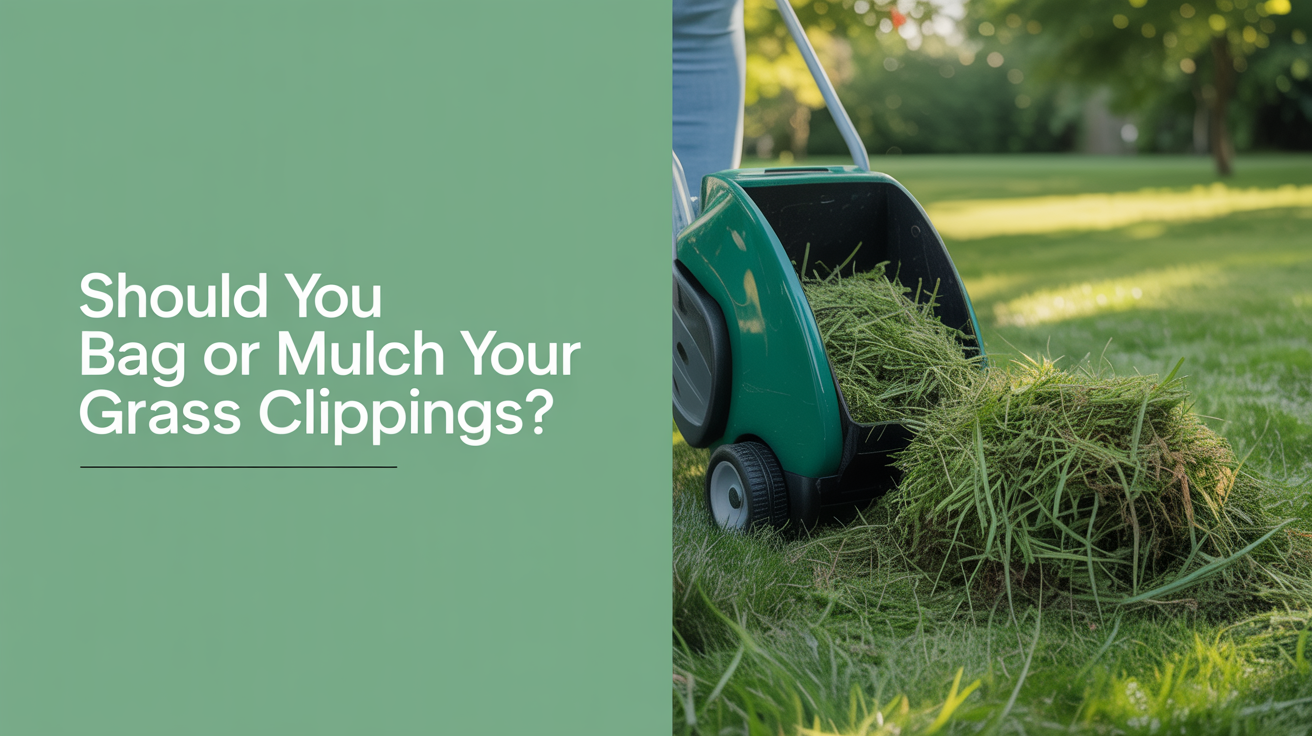
For most home lawns, mulching your clippings is the better call. They break down quickly, return nitrogen to the soil, and save you the hassle of dragging bags to the curb. That said, there are real situations where bagging makes more sense. Here is how to read your lawn and pick the right approach.
What Happens to Clippings After You Mow
Grass blades are mostly water, somewhere around 80 to 85 percent by weight. When you cut them small and scatter them across the surface, they wilt fast. Within a day or two, soil microbes go to work and the clippings decompose into the top layer of your lawn.
That decomposition is a good thing. A season of returning clippings can supply roughly a quarter of your lawn's annual nitrogen needs, which translates directly into fewer fertilizer applications. This is the core idea behind grasscycling, a practice as straightforward as it sounds: let the grass cycle its own nutrients back into the soil.
The myth you might have heard is that clippings cause thatch. Thatch is that spongy brown layer that builds up between the grass blades and the soil. It is made mostly of roots, stems, and organic material that decomposes slowly. Clippings are not the culprit. They break down too quickly to contribute meaningfully to a thatch problem. Compacted soil, aggressive grass varieties, and heavy nitrogen applications are far more likely to be the cause.
When Mulching Makes Sense
Mulching works well under one condition above all others: you are cutting no more than a third of the blade at a time. When clippings stay short, they filter down through the canopy without smothering anything. They dry fast and decompose fast.
Mulching is the right move when:
- The lawn is healthy, with no active disease outbreak
- You mow on a regular schedule and the grass has not gotten away from you
- The weather is dry enough that clippings will not clump and mat on the surface
- You want to reduce fertilizer applications over time
- You are trying to simplify your mowing routine
A mulching mower does this work more efficiently than a standard deck. Mulching mower benefits come from the blade design: a curved, high-lift blade that circulates clippings inside the deck several times before depositing them as fine particles. Fine particles decompose faster and are less visible than long, stringy pieces. If your current mower has a standard blade and an open discharge chute, you can often add a mulching blade and a block-off plate for the chute. It is worth checking what fits your model.
For more on timing your cuts to avoid taking off too much at once, see how high you should cut your grass by type.
When Bagging Is the Right Call
There are specific situations where collecting your clippings is worth the extra work.
The lawn has a disease problem. Fungal diseases like brown patch or dollar spot spread through infected plant material. Mowing over diseased grass and spreading clippings around the lawn is a reliable way to move the problem from one spot to everywhere. When you see signs of disease, bag the clippings and dispose of them. Do not compost them unless your pile reliably reaches high enough temperatures to kill pathogens.
You missed a mow and the grass is tall. Long clippings do not behave like short ones. They pile up in visible rows and can smother the turf underneath if they do not dry and scatter on their own. If the lawn is noticeably overgrown, bag this cut and get back on schedule. Alternatively, you can mow at a higher setting, bag, then come back a few days later and cut again at your normal height.
You have recently applied weed killer. If you treated the lawn with a selective herbicide and the weeds are still dying off, you do not want those clippings going into a compost bin that will feed your garden beds. Check the product label. Some recommend waiting a certain number of mowings before grasscycling resumes. Always follow label instructions.
The lawn is wet. Wet clippings clump together and stick in thick mats. They block light, hold moisture against the soil surface, and create a favorable environment for fungal issues. If conditions are wet, either wait for things to dry out or bag the cut.
Are Grass Clippings Good for the Lawn Year-Round?
In general, yes, but the balance tips toward bagging in a few seasonal windows.
| Season | Typical recommendation | Notes |
|---|---|---|
| Spring (rapid growth) | Bag or mow often | Avoid heavy clipping buildup during flush growth |
| Summer | Mulch, if mowing on schedule | Clippings dry fast; good nutrient return |
| Early fall (overseeding window) | Bag before and after overseeding | Clear debris for seed-to-soil contact |
| Late fall (final cuts) | Mulch or bag | Either works; mulching returns nutrients before dormancy |
Spring is when most problems happen. Grass comes out of dormancy fast, weather is often wet, and lawns can get ahead of you within a week. If you are mowing every five to seven days and still finding long clippings, raise the cutting height slightly and bag until growth steadies.
Early fall is also worth paying attention to. If you plan to overseed thin spots, a clean surface matters. Thick clipping buildup or existing debris can prevent good seed-to-soil contact. For more on how fall watering and care ties into your full-season plan, have a look at how often and how deep to water your lawn.
Practical Grasscycling Tips
Grasscycling is not complicated, but a few habits make it work better.
Mow when the grass is dry. Dry clippings scatter evenly. Wet ones clump. This single habit handles most of the common complaints people have about mulching.
Sharpen your mower blade at least once a season. A sharp blade cuts cleanly and produces smaller pieces. A dull blade tears grass, leaving ragged tips that dry slowly and look brown for a day or two after cutting. Freshly torn clippings also break down more slowly.
Stick to the one-third rule. If you cut no more than a third of the blade at a time, the clippings will always be short enough to vanish into the turf. Letting the lawn grow tall before mowing is the single biggest reason mulching looks messy. Keeping to a consistent schedule makes it invisible.
Do not over-fertilize. This sounds counterintuitive when one of the selling points of grasscycling is returning nitrogen to the lawn. But if you are already applying heavy nitrogen rates, the extra input from clippings can push growth too fast. If you grasscycle consistently, you can back off your fertilizer program by roughly a quarter to account for the nutrient return.
Check your mowing schedule against a month-by-month lawn care calendar to see when the workload shifts and plan ahead.
Frequently Asked Questions
Will leaving grass clippings cause thatch? No. Thatch is made of tough, slow-decomposing plant parts like roots and crowns. Grass clippings are mostly water and break down in days. Researchers have studied this directly and found no meaningful link between grasscycling and increased thatch buildup.
How long do grass clippings take to decompose? Under normal conditions, short clippings disappear within a week. Warm, slightly moist soil with active microbial populations speeds things up. Cold soil or very dry conditions slow decomposition, which is one reason bagging can make more sense in very early spring or during drought stress.
Can I put grass clippings in my compost bin? Yes, with two cautions. First, do not add clippings from a lawn recently treated with herbicide. Second, clippings are nitrogen-rich and can mat together in a pile. Mix them with carbon-rich material like dry leaves or cardboard to keep air moving through the pile.
Do I need a special mower to mulch clippings? A dedicated mulching blade helps a lot, but it is not strictly required. Some standard mowers mulch reasonably well at moderate cutting heights. The real requirement is cutting frequently enough that clippings stay short. A mulching blade running over long grass still produces long clippings.
Is grasscycling worth it on a small lawn? Absolutely. The nitrogen savings are proportionally the same regardless of square footage, and there is less bagging work to skip out on anyway. Small lawns often benefit most because the convenience difference between bagging and not bagging is most noticeable when you are doing the work yourself with a push mower.