Lawn Care Basics
Spring Lawn Cleanup: The First Jobs of the Season
A practical spring lawn care guide for beginners: when to start, what to rake, how to assess winter damage, and the first jobs that set up a strong growing s...
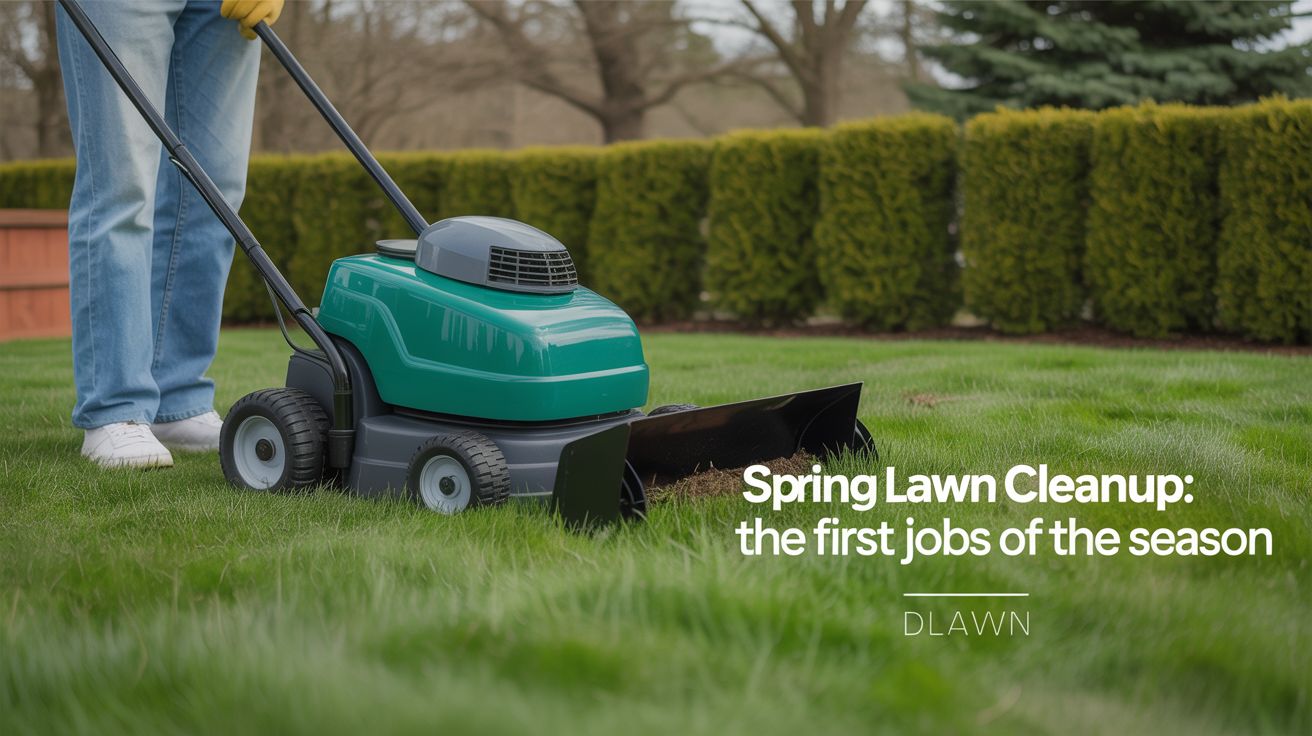
Spring lawn care does not need to be complicated. The core idea is simple: clear away what winter left behind, take a honest look at what you are working with, and let the grass ease back into growth before you ask anything demanding of it. Do those three things in the right order and the rest of the season follows naturally.
This guide walks through the first jobs of the season in the sequence that makes sense, with timing cues for both cool-season and warm-season lawns.
When Is It Actually Time to Start?
Rushing onto a wet, soft lawn in early spring does real harm. Compacted, waterlogged soil is easy to damage underfoot, and grass crowns that are still dormant or barely awake do not appreciate being disturbed. A good rule of thumb: wait until the soil has dried out enough that walking on it does not leave deep footprints, and until nighttime temperatures are consistently staying above freezing.
For cool-season grasses (tall fescue, Kentucky bluegrass, perennial ryegrass), the active growing period is spring and fall. These lawns green up early, often in late February or March depending on your region, and they are ready for light cleanup work as soon as the ground firms up.
For warm-season grasses (bermuda, zoysia, St. Augustine, centipede), spring is the transition out of dormancy. Do not start aggressive cleanup or any feeding until you see genuine green growth pushing through. Jumping in too early when the grass is still brown and dormant is largely wasted effort.
If you want a month-by-month view of what to tackle and when, A Month-by-Month Lawn Care Calendar lays it out in detail.
Raking: More Than Tidying Up
Raking the lawn in spring is one of those jobs that looks cosmetic but has real turf benefits. Here is what you are actually accomplishing:
Removing matted thatch and dead grass. Over winter, dead leaf blades and thatch can pack down into a dense layer. This mat blocks light, holds too much moisture, and creates a favorable environment for fungal issues as temperatures warm up. A thorough raking lifts and removes it.
Breaking up snow mold. If you had persistent snow cover, you may notice circular gray or pink patches where the grass looks matted and discolored. This is snow mold. Raking those areas gently will break up the mat and allow the grass to dry out and recover. Most lawns bounce back on their own once airflow returns; in severe cases the dead patches may need overseeding later.
Clearing debris. Twigs, leaves that blew in over winter, acorn caps, and general yard litter all need to come up. Left in place they shade out grass and hold moisture against the crowns.
Use a flexible leaf rake rather than a rigid garden rake for this work. The goal is to lift and collect, not to scrape the soil. Work in one direction first, then go over the lawn a second time at a 90-degree angle to catch what you missed. Pay extra attention to low-lying spots and areas under trees where debris accumulates.
Walk the Lawn and Take Stock
Before you reach for any product or start any project, spend fifteen minutes just walking the lawn and observing. Early spring is the best time to see problems clearly, before the growing season fills things in or complicates the picture.
Look for:
- Thin or bare patches. These are candidates for overseeding. Note their location and rough size. Cool-season lawns can be overseeded in early spring, though fall is generally better. Warm-season lawns are overseeded in late spring once soil temperatures climb.
- Drainage low spots. Areas that stay soggy long after the rest of the lawn dries out will struggle all season. You can address minor low spots by top-dressing with a mix of compost and sand; significant drainage problems may need more involved work.
- Winter heaving. In cold climates, freeze-thaw cycles can push soil up and expose grass roots. Those areas feel spongy and uneven. Light rolling (only when the soil is firm, not wet) or simply allowing the soil to settle back down over a few weeks usually resolves it.
- Grub or vole damage. Irregular dead patches where the turf lifts easily like a loose rug often indicate grub feeding below the surface. Voles leave visible runway trails through the grass. Both are easier to plan around when you catch them early.
This assessment walk will help you prioritize. Most yards have one or two things that genuinely need attention and several things that just need time and regular mowing.
The Spring Lawn Cleanup Checklist
Here is a practical sequence for early season lawn care. Not every item applies to every lawn; work through what fits your situation.
| Task | Cool-Season Timing | Warm-Season Timing |
|---|---|---|
| Rake and remove debris | As soon as soil firms up | After last frost risk passes |
| Dethatch (if thatch exceeds 1/2 inch) | Early spring, before heavy growth | Late spring, as grass greens fully |
| Edge beds and borders | Any dry day in early spring | Same |
| First mow | When grass reaches 1/3 above target height | Once grass is actively growing and green |
| Soil test (every 2-3 years) | Early spring | Early spring or fall |
| Overseed bare patches | Early spring or wait for fall | Late spring when soil temps are warm |
| Apply pre-emergent (if using one) | Before soil temps hit 55 degrees F | Same general window |
| First fertilizer application | Mid-spring after 2-3 mowings | Late spring, once actively growing |
A note on pre-emergent herbicides: if you plan to overseed bare patches this spring, you generally cannot apply a pre-emergent at the same time, since it will prevent your grass seed from germinating along with the weed seeds. Choose one approach or the other, and read the product label carefully for timing and restrictions.
First Mow and Early Watering
The first mow of the season sets a tone. Resist the urge to cut short. Scalping a lawn in spring stresses grass that is working hard to rebuild its root system and leaf area after winter.
Follow the one-third rule: never remove more than one-third of the blade height in a single mowing. If your lawn grew long over a mild winter or early spring, ease it down over two or three mowings rather than cutting it all at once. For help figuring out the right target height for your specific grass type, How High Should You Cut Your Grass: Mowing Heights by Grass Type covers the numbers by species.
Make sure your mower blade is sharp before the first cut. A dull blade tears grass rather than cutting it cleanly, leaving ragged tips that turn brown and provide entry points for disease. Sharpening or replacing the blade takes thirty minutes and makes a noticeable difference in how the lawn looks after mowing.
On the watering side, spring usually brings enough rainfall that supplemental irrigation is not necessary in the first weeks. But keep an eye on things. A lawn coming out of winter dormancy benefits from consistent, moderate moisture as roots push back into active growth. If you hit a dry stretch, water deeply and less frequently rather than giving the lawn light daily sprinkles. How Often and How Deep to Water Your Lawn explains what "deep" actually means in practice.
A Word on Timing Your Inputs
One of the most common spring mistakes is doing too much too fast. Fertilizing a cool-season lawn before it has made any real growth, or applying crabgrass preventer weeks after it was needed, both fall into this category. Products do not save time when applied out of the right window; they often create problems.
The soil temperature is a more reliable guide than the calendar date. A basic soil thermometer costs a few dollars and takes the guesswork out of timing for pre-emergent applications, overseeding, and the first fertilizer pass. It also helps you understand whether your cool-season grass is genuinely in growth mode or still waiting on warmer soil.
Spring lawn care rewards patience more than hustle.
Frequently Asked Questions
Should I dethatch every spring?
Most lawns do not need annual dethatching. Thatch builds up slowly, and significant accumulation (over half an inch) typically takes several years. Check by pressing a finger into the lawn; if there is a thick, spongy layer between the grass blades and the soil surface, dethatching may help. If the layer is thin, skip it and focus on other jobs.
When should I apply the first fertilizer of the year?
For cool-season grasses, wait until the lawn has been actively growing for three to four weeks and you have mowed two or three times. Feeding too early puts nutrients into soil that roots cannot yet absorb efficiently. For warm-season grasses, hold off until the lawn is fully green and growing vigorously, which typically means late spring.
My lawn has bare patches from winter. Should I reseed now?
For cool-season lawns, light overseeding in early spring can work, but fall is the better window because cooler temperatures and consistent moisture give seed a stronger start. If the patches are small, you can patch them now with a little patience. For warm-season grasses, wait until soil temperatures are reliably above 65 degrees Fahrenheit before seeding.
Is it okay to walk on the lawn right after snow melts?
Try to minimize foot traffic until the soil has firmed up. Saturated spring soil compacts easily, which reduces oxygen in the root zone and makes it harder for grass to grow well all season. Give the lawn a week or two to dry out before you start raking and doing cleanup work.
Do I need to aerate in spring?
Aeration in spring is generally more useful for warm-season grasses, which can recover quickly in their main growing period. For cool-season grasses, fall aeration is usually preferred because it coincides with the prime growing window. If your soil is severely compacted, spring aeration is better than no aeration, but time it to fall if you can plan ahead.