Weeds & Pests
Dealing With Dandelions Without Wrecking the Lawn
Learn how to kill dandelions by pulling the full taproot or spot-treating with selective herbicide, plus the long-term fix: thicker turf.
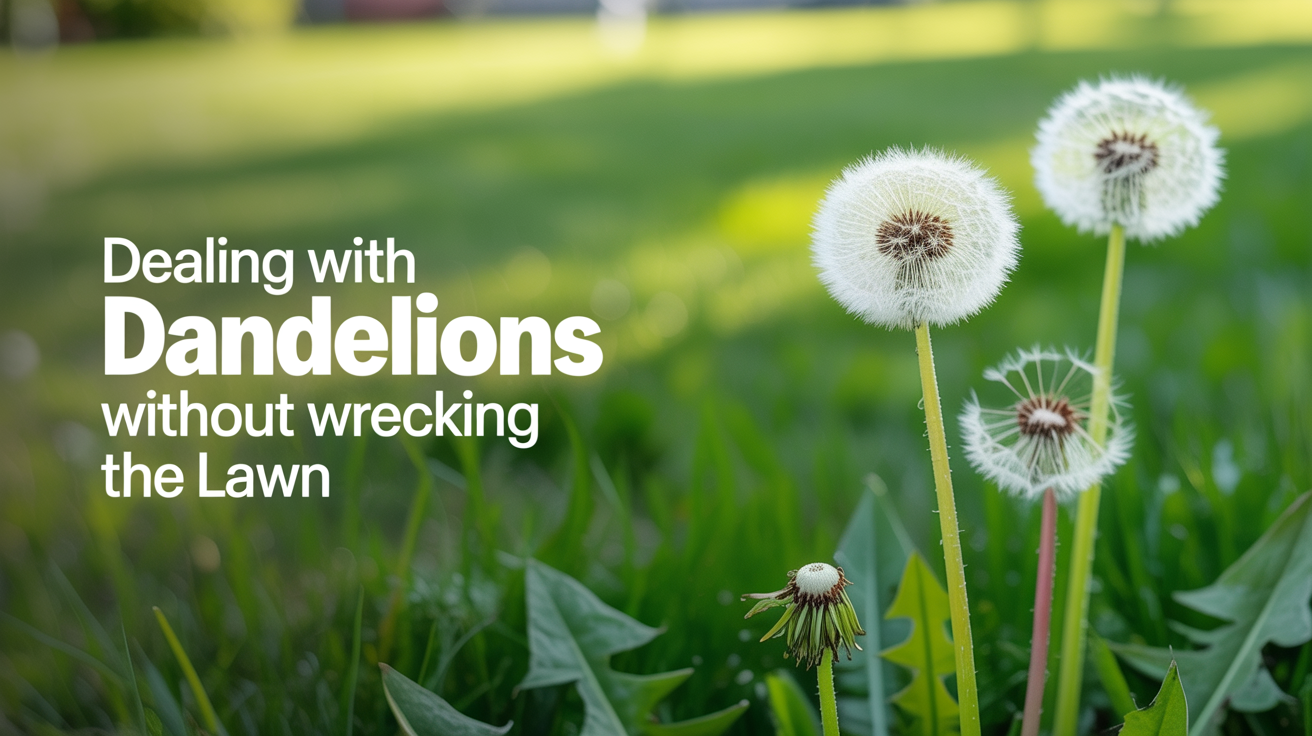
Dandelions are not a mystery. If you want to know how to kill dandelions for good, the answer comes down to two options that actually work: pull them out with the entire taproot, or spot-treat them with a selective broadleaf herbicide. Every other approach, mowing, smothering with mulch, burning the rosette off, gets them back by July. The real long-term fix is a lawn thick enough that dandelion seedlings can't get light at soil level. That part takes a season or two, but the short-term removal tactics below will carry you in the meantime.
Why Dandelions Take Hold
Dandelions thrive in exactly the conditions that stress grass: compacted soil, thin turf, low fertility, and bare patches left by drought or foot traffic. Each mature plant produces a taproot that can reach 6–18 inches deep, which is why mowing only cuts the top off and the plant regrows within days. The root stores carbohydrates and keeps sending up new rosettes no matter how many times you clip the leaves.
Seed production makes the problem self-reinforcing. A single plant can produce more than 2,000 seeds per year, each one wind-carried on a familiar white parachute. Seeds that land on exposed soil (or thin turf where light reaches the ground) germinate readily. Once established, a dandelion is essentially permanent unless the root is fully removed or killed.
Soil compaction is a major enabler. Compacted ground slows grass root development while dandelion taproots push through it without much trouble. If you're seeing heavy dandelion pressure across the whole lawn, it's worth aerating before you overseed in fall. That addresses one of the root causes rather than just the symptoms.
How to Pull Dandelions the Right Way
Hand removal works well when the population is manageable, say, under a few dozen plants across a standard residential yard. The key is removing the entire taproot. Snapping it off 2–3 inches down leaves enough root mass to regenerate.
What you need: A dandelion fork (also sold as a fishtail weeder or crack weeder) or a long-blade soil knife. A standard trowel is too wide and too short. The dandelion fork has two tines that straddle the taproot, letting you lever it out without as much collateral digging.
Steps:
- Water the lawn the night before, or pull after a rain. Moist soil releases roots cleanly; dry compacted ground snaps them.
- Push the fork straight down alongside the taproot, about 4–6 inches deep.
- Lever the handle toward the ground while lifting the plant gently with your other hand.
- Wiggle slightly and pull upward in one slow motion. Check that the root comes out intact. A healthy taproot is pale yellow-white and tapers to a point.
- Drop the whole plant (root included) into a bucket, not onto the lawn. Dandelion flowers can set seed even after the plant is pulled.
- Tamp the soil back down and press the surrounding grass flat.
The hole left behind should be small enough that neighboring grass fills it in within a few weeks, especially if you top-dress with a pinch of seed. If you end up with a lot of holes, overseed the area lightly to keep bare spots from becoming new dandelion real estate.
Selective Herbicides: What to Use and When
For large infestations or areas where hand-pulling isn't practical, a selective broadleaf herbicide is the right tool. "Selective" means it targets broadleaf plants without harming lawn grasses. Products containing 2,4-D, MCPP, or dicamba (often sold as three-way blends under names like Trimec) are widely available and effective. Always read the full label before mixing or applying. Labels carry legal weight and contain rate and timing information that no article can substitute for.
Fall application is more effective than spring. In early-to-mid fall (typically September through October in most of the U.S.), dandelions are actively moving carbohydrates down into the root system to prepare for winter. A herbicide applied at that point travels the same direction, reaching the full root mass. Spring applications hit the plant when it's pushing energy upward into new leaf growth, which means less herbicide reaches the root and regrowth is more common.
A few practical notes on application:
- Spot-treat individual plants rather than broadcasting over the whole lawn. This protects pollinators (bees forage on dandelion flowers, particularly in spring) and reduces product use.
- Apply when rain isn't expected for 24–48 hours. Rain washes the herbicide off before the leaves absorb it.
- Don't mow for two or three days before or after treating. Leaves need surface area to absorb the product, and mowing right after removes treated tissue.
- Wait until the lawn is actively growing and air temperatures are between roughly 60°F and 85°F. Herbicides move poorly in cold or heat-stressed plants.
For context on how selective broadleaf products compare to pre-emergent approaches, pre-emergent vs. post-emergent weed control explained covers the underlying timing logic in more detail.
Preventing Dandelions by Thickening the Turf
Removal deals with the dandelions already there. Prevention is about making the lawn inhospitable to seedlings. Dandelion seeds need light at ground level to germinate and establish. Thick, healthy turf shades the soil enough to suppress most of them before they get started.
Raise your mowing height. Most cool-season grasses (fescue, bluegrass, ryegrass) perform best when kept at 3–4 inches. Tall grass shades the soil more effectively than short-cut grass, and taller blades photosynthesize more, producing deeper root systems that compete better against weeds.
Overseed thin areas in early fall. Overseeding in late August through September fills bare patches before winter. New grass plants establish through fall and spring, closing the gaps where dandelion seeds would otherwise land on open ground.
Fertilize appropriately. A lawn that's running low on nitrogen thins out and goes pale, giving weeds a foothold. A soil test (most cooperative extension offices offer them inexpensively) tells you exactly what your soil is missing without guessing.
Address compaction. Core aeration in fall improves water and nutrient penetration, which benefits grass roots more than dandelion taproots. Pair it with overseeding for maximum effect.
This approach applies equally to other broadleaf weeds. The strategies for removing clover from the lawn and dealing with grassy invaders like crabgrass overlap here: the underlying principle is the same. Healthy, thick turf is harder to colonize.
Frequently Asked Questions
Does vinegar kill dandelions?
Household vinegar (5% acetic acid) burns the foliage but does not kill the root. The plant regrows from the taproot within a week or two. Horticultural vinegar (20–30% acidity) does more damage but still doesn't reliably kill the root, and at those concentrations it can burn skin and eyes and may harm soil biology. It's not a substitute for proper removal or selective herbicide.
Will mowing dandelions spread them?
Mowing a dandelion in full bloom can spread seeds if the seed heads have already formed. If the plant is only in the yellow flower stage, mowing mostly just cuts the flower off and triggers faster regrowth. The safest approach is to remove or treat dandelions before they reach the white seed-head stage.
How long does it take for herbicide to kill dandelions?
Most selective broadleaf herbicides show visible leaf yellowing and wilting within 3–7 days. Full kill of the root can take 2–3 weeks. If the plant looks affected but hasn't died back completely at three weeks, a second application may be needed (follow label instructions on retreatment intervals).
Can I pull dandelions in summer?
Yes, but it's harder. Dry summer soil grips the taproot more firmly, and the root snaps more easily. Water thoroughly the evening before pulling, and plan to work in the morning before the ground dries out again. Summer is also a reasonable time for herbicide spot treatment if temperatures are moderate.
Is it okay to leave dandelions in the lawn?
From a turf health standpoint, dandelions compete with grass for water, nutrients, and light. A few scattered plants in an otherwise healthy lawn do minimal harm. A dense infestation, though, signals an underlying problem with soil or turf density that will get worse if ignored. Pollinators do use dandelion flowers in early spring when few other options are available, which is one reason spot treatment is preferable to blanket spraying.