Weeds & Pests
How to Get Rid of Clover in the Lawn
Clover takes hold in low-nitrogen, thin turf. Learn how to remove it by hand, smother it, feed the lawn, or use a selective herbicide.
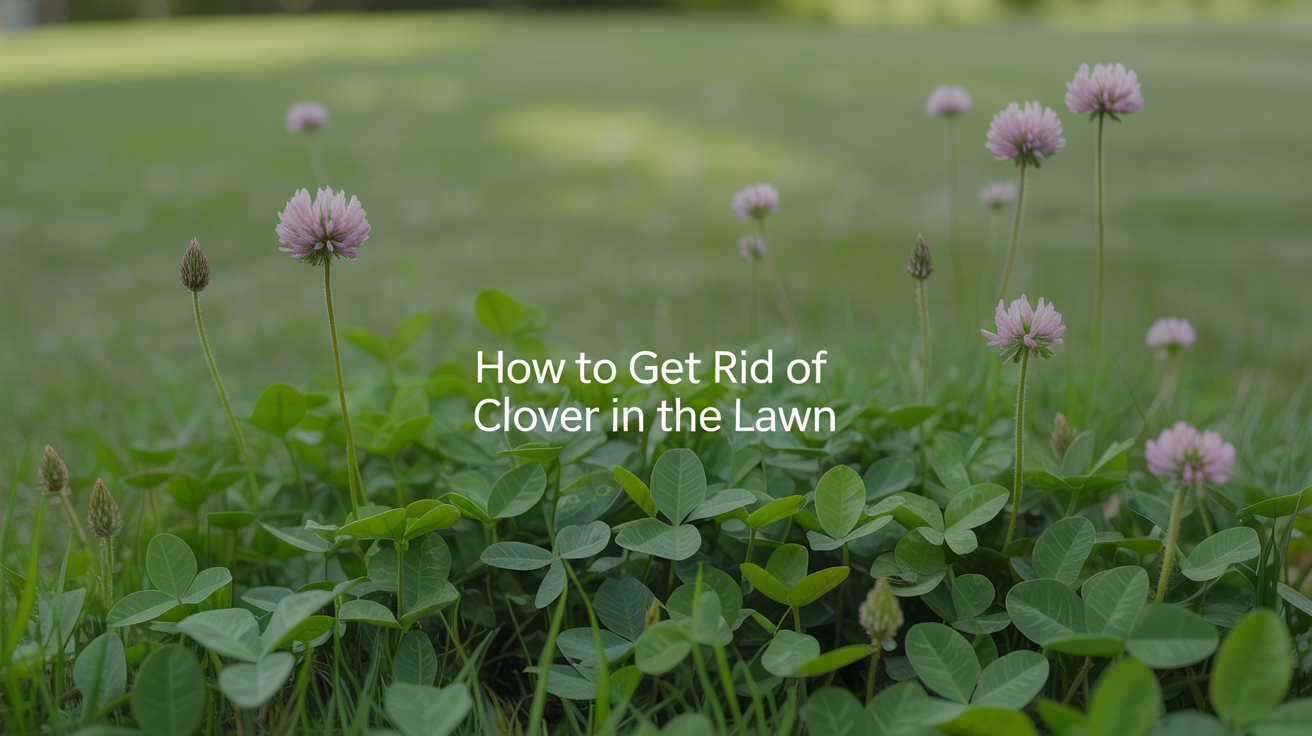
Clover creeps in when the lawn gives it an opening: thin turf, compacted soil, or a lack of nitrogen. Once a few plants take hold they spread by runners and seed, and a small patch can cover a significant area by the following summer. The fix is two-part: remove what's already there (by hand, smothering, or herbicide), then address the conditions that invited it in the first place. A thick, well-fed lawn is the most durable long-term answer.
Why Clover Grows in Your Lawn
Understanding the cause saves a lot of repeat effort. Clover is a legume, which means it pulls nitrogen from the air through symbiotic root bacteria and feeds itself without any help from the soil. That ability makes it highly competitive whenever grass is struggling to get enough nitrogen.
Several conditions favor clover over turf:
- Low soil nitrogen. Grass needs regular feeding; clover does not. In a nitrogen-deficient lawn, clover has a clear competitive advantage and spreads quickly into thin areas.
- Compacted soil. Heavy foot traffic, clay-heavy ground, and years without aeration compress the soil so grass roots can't go deep. Clover's root system handles compaction more easily.
- Thin or bare patches. Any gap in the turf canopy is an invitation. Seeds blow in, germinate, and establish before the surrounding grass can close the space.
- Low or inconsistent mowing. Clover is low-growing and sprawling. When grass is mowed too short it weakens; when mowing is irregular it allows clover foliage to mature and set seed.
- High soil pH (too alkaline). Most grasses prefer a pH between 6.0 and 7.0. Above that range, nutrient uptake suffers and clover gets an edge.
If you're also seeing crabgrass pushing through thin spots, those same underlying conditions are likely at work. The article on how to identify and get rid of crabgrass covers the overlap in detail.
Should You Even Remove It?
This is worth thinking through before you reach for a herbicide. White clover (Trifolium repens) has a real ecological upside: its flowers support bees and other pollinators during a stretch of summer when many other food sources are sparse. The nitrogen-fixing roots also feed the surrounding grass to some degree, which is exactly why it was intentionally seeded into lawns before synthetic fertilizers became common.
If your lawn is informal, clover can fill bare spots and reduce the need for supplemental nitrogen. It stays green during mild droughts when grass goes dormant.
On the other hand, clover has real drawbacks for a formal lawn. It attracts stinging insects to areas where bare feet or children are common. It's slippery when wet. It dies back in winter, leaving brown patches. And it spreads aggressively once established. So removal makes sense for high-traffic, kid-friendly, or aesthetically uniform lawns. The decision is practical, not moral.
Getting Rid of Clover Without Chemicals
If you'd prefer to avoid herbicides, several mechanical and cultural approaches work well, particularly when clover coverage is modest.
Hand-pulling is the most straightforward option for small patches. Clover's roots are shallow and fibrous, so it pulls out cleanly if you get the whole crown. Work after rain or irrigation when soil is loose. Remove the runners that spread along the soil surface, then dispose of the plants (don't compost them if they've already flowered and set seed).
Smothering works for larger areas you're willing to renovate. Cover the patch with cardboard or several layers of newspaper, then top it with a few inches of mulch or topsoil. This blocks light for 4–6 weeks, which is usually enough to kill the clover. After that, overseed the area to establish grass before the next weed flush.
Improving soil fertility is the single most effective long-term measure. Apply a balanced slow-release nitrogen fertilizer at the rate recommended for your grass type, typically in early fall for cool-season grasses and late spring for warm-season varieties. A soil test will tell you whether you also need to correct pH (lime to raise it, sulfur to lower it) or address phosphorus levels. Once the grass is well-fed and thick, clover simply loses the competition.
Raising the mowing height gives grass a canopy advantage. Mowing at 3 to 3.5 inches for most cool-season species shades the soil surface, making germination harder for any broadleaf weed.
Core aeration addresses compaction directly. Run a plug aerator in fall for cool-season grass or late spring for warm-season grass. Follow with fertilizer and overseeding to fill the opened channels.
Chemical Options: Selective Broadleaf Herbicides
When clover has spread widely across the lawn, a selective broadleaf herbicide is the most practical control. These products kill broadleaf plants while leaving grass intact.
Herbicides that include combinations of 2,4-D, MCPP (mecoprop), and dicamba are common and widely available. Products sold as "weed-and-feed" contain the same active ingredients alongside fertilizer. Post-emergent selective herbicides labeled for clover also sometimes include triclopyr or clopyralid, which can be more effective on clover specifically.
A few practical points before you apply:
- Read the label in full. The label is the legal document governing safe use, rates, and timing. Apply only at the rate specified.
- Don't apply before rain. Herbicides need to be absorbed by the leaf surface. Rain within 24 hours washes the product off before it works.
- Avoid application in high heat. Above 85°F, selective herbicides can volatilize and drift onto desirable plants, and stressed turf is more vulnerable to damage.
- Check grass species compatibility. Some cool-season grasses (particularly bentgrass and St. Augustine) are sensitive to certain active ingredients. Confirm your grass type before selecting a product.
- Expect repeat applications. One treatment rarely eliminates all clover. A follow-up 3–4 weeks later catches survivors and new seedlings.
- Keep children and pets off treated areas until the product has dried, per label instructions.
For context on how selective herbicides fit into a broader weed management program, the explainer on pre-emergent vs. post-emergent weed control is useful reading. And if dandelions are sharing the patch with your clover, the approach is similar enough that handling both at once often makes sense. See dealing with dandelions without wrecking the lawn for specifics.
After Treatment: Keep Clover from Coming Back
Control without prevention is just buying time. Once you've removed the clover, these steps make reinvasion much harder:
- Overseed bare or thin areas in early fall with a quality grass seed matched to your region. Dense turf is the best weed suppressant you have.
- Maintain a consistent fertilization schedule. Cool-season grasses generally need two to four applications per year; warm-season grasses typically need feeding from late spring through summer.
- Test soil pH every two to three years and correct as needed. Most lawn grasses perform best between 6.0 and 7.0.
- Keep mowing height at the upper end of the recommended range for your grass type.
Frequently Asked Questions
How do I know if I have white clover or another type?
White clover (Trifolium repens) is the most common lawn species. It has round, three-part leaves with a pale chevron or crescent mark on each leaflet, and produces small white or pinkish globe-shaped flowers from late spring through summer. Red clover (Trifolium pratense) is taller and less common in lawns. Black medic looks similar but has a slightly different leaf shape and yellow flowers. If you're uncertain, a cooperative extension office can help with identification.
Will vinegar kill clover?
Household vinegar (5% acetic acid) will burn the visible foliage of clover on contact, but it doesn't translocate to the roots. The plant typically regrows within a few weeks. Horticultural vinegar (20–30% concentration) is more damaging but is also non-selective, meaning it will kill or damage any plant it touches, including surrounding grass. It also requires careful handling. For targeted clover removal, it's not the most effective tool.
Can I just mow the clover before it flowers?
Mowing before clover blooms prevents seed spread, which is useful. But clover also spreads by surface runners, so mowing alone won't eliminate an established patch. It does reduce the pressure on surrounding grass and is worth doing regularly as a maintenance measure while you address the underlying fertility issues.
Is clover bad for dogs or kids?
White clover itself is not toxic to dogs or children. The bigger concern is that clover flowers attract bees, which raises the risk of stings for anyone walking barefoot. If your lawn sees a lot of foot traffic, that's a reasonable practical argument for removal.
How long does it take to get rid of clover completely?
With consistent effort, most lawns see meaningful improvement within one growing season. A herbicide application in spring or early fall, followed by overseeding and a proper fertilization schedule, typically reduces clover coverage substantially within 6–8 weeks. Full elimination takes longer because seeds can persist in the soil for years. The goal is to keep the grass thick enough that new seedlings can't establish.