Weeds & Pests
How to Identify and Get Rid of Nutsedge
Learn to spot yellow and purple nutsedge, understand why pulling it back-fires, and find out which selective herbicides actually clear sedge from your lawn.

If you have a patch of grass-like growth that seems to outpace everything around it in mid-summer heat, you may be dealing with nutsedge. It looks enough like turf that many homeowners spend a season pulling it before realizing it keeps coming back thicker than before. This guide covers how to tell nutsedge from grass, why it is so stubborn, and what it actually takes to get it under control.
At a Glance
- Nutsedge is a sedge, not a grass; roll the stem between your fingers, sedges have a triangular cross-section, grasses are round or flat.
- Standard broadleaf weed killers (2,4-D, dicamba) do nothing to it. You need a sedge-specific herbicide like halosulfuron, sulfentrazone, or bentazon.
- Clemson HGIC notes tubers can sit 8-14 inches below the surface, well out of reach of hand-pulling.
- NC State Extension reports a single yellow nutsedge plant can produce as many as 6,000 tubers, some staying dormant in soil for up to 10 years.
- Hand-pulling almost always makes an infestation worse by triggering new tuber production.
- Realistic timeline for control: one to three growing seasons, combining herbicide treatment with fixing wet or compacted soil.
How to Identify Nutsedge
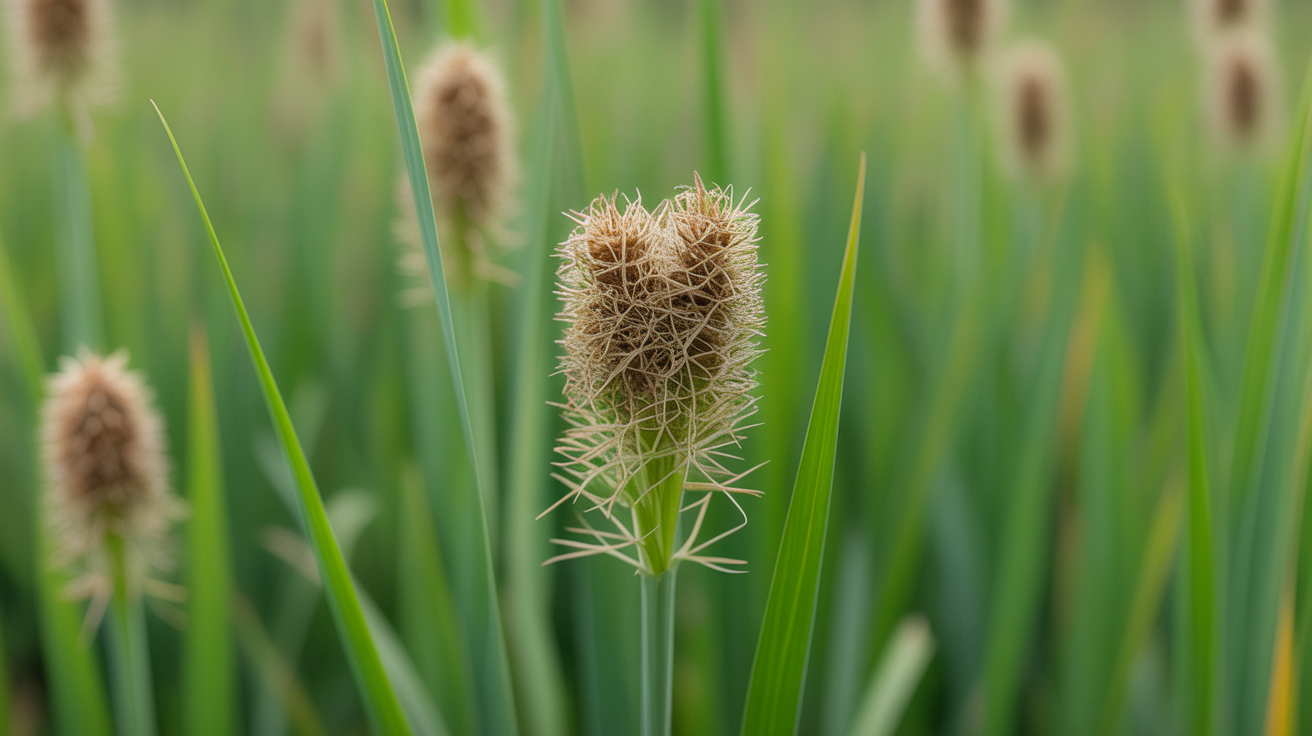
Nutsedge is a sedge, not a grass, which matters because herbicides that kill grasses or broadleaf weeds generally do nothing to it. The quickest way to tell the two apart is to roll the stem between your fingers. Sedge stems are triangular; grass stems are round or flat. There is an old gardening saying for this: "sedges have edges."
A few other things to look for:
- Color and shine. Yellow nutsedge (Cyperus esculentus) is a lighter, yellower green than most lawn grasses, and the leaves have a waxy look in direct sun. Purple nutsedge (Cyperus rotundus) runs darker and may show a slight reddish tint at the base. Clemson HGIC adds a useful identification detail: yellow nutsedge tends to emerge earlier in the season with lighter foliage, while purple nutsedge shows up later and darker.
- Growth rate in summer. Both species push upward fast during hot, humid weather. A patch of nutsedge will stand noticeably taller than your surrounding turf just two to three days after mowing, since its growing point sits below the mower blade's reach the way grass crowns do not.
- Seed heads. When nutsedge is allowed to mature, it sends up a triangular flower stalk topped with a spiky, starburst-shaped seed head. Yellow nutsedge seed heads are golden brown; purple nutsedge seed heads are darker and reddish-purple.
- Underground structure. If you dig up a plant and look at the roots, you will find small, hard, roundish tubers (sometimes called nutlets) attached by rhizomes. These are what make nutsedge so hard to eliminate.
In North America, yellow nutsedge is the more common of the two, especially in cooler and temperate regions. Purple nutsedge is more common in the South and in tropical climates. The control methods for both are similar, though purple nutsedge tends to be the harder one to knock back completely.
Why Nutsedge Thrives in Wet and Compacted Soil
Nutsedge is a native of wetlands and the edges of streams. It is adapted to soil that holds water or that dries and cracks, and it handles both far better than most lawn grasses. Two conditions invite it in:
Wet spots. Low areas that collect runoff, downspout discharge that pools before draining, or irrigation that runs longer than the soil can absorb all create the moist conditions nutsedge prefers. When the surrounding turf struggles in soggy soil, nutsedge fills the gap. Watering deeply but infrequently helps keep the top few inches of soil from staying constantly saturated, which makes your turf more competitive and your lawn less inviting to sedge.
Compacted soil. Compaction squeezes out air pockets, slows drainage, and creates the wet-then-hard-dry cycle that nutsedge handles better than grass. Foot traffic, vehicle ruts, and heavy clay soils all contribute. Core aeration opens up compacted ground, improves drainage, and lets grass roots go deeper, which helps turf hold its own against encroaching sedge over time.
It is worth checking your soil if nutsedge keeps returning in the same spots. A drainage issue or compaction problem will keep feeding the weed even after you treat it. A basic soil test can also tell you whether low fertility is weakening your turf and leaving room for sedge to move in.
Why Hand-Pulling Does Not Work
Pulling nutsedge by hand feels satisfying in the moment but almost always makes things worse. When you yank the top of a nutsedge plant, you break the rhizome connecting it to the tubers below. Each broken connection signals the plant to produce more tubers as a survival response. A single plant left undisturbed might have a handful of tubers. NC State Extension's research puts a number on just how bad this can get: a single yellow nutsedge plant left to grow can eventually produce as many as 6,000 tubers over a season, and some of those tubers can remain viable and dormant in the soil for up to 10 years before sprouting.
The tubers are also remarkably persistent, and Clemson HGIC notes they can sit 8 to 14 inches below the soil surface, well beyond where hand-pulling or shallow digging ever reaches. Trying to dig out every tuber by hand is rarely practical in an established lawn, and any small ones left behind will regrow. New tubers can also begin forming within just four to six weeks of a shoot emerging, so even a fast response after spotting a new patch may already be too late to prevent tuber buildup underground.
Mowing does not kill nutsedge either, though keeping turf at the right height reduces the weed's ability to get enough light. The real solution requires either a selective herbicide, a long-term change to site conditions, or both.
Herbicides That Actually Work on Nutsedge
Standard broadleaf weed killers, including products containing 2,4-D or dicamba, do not work on nutsedge. You need a herbicide formulated specifically for sedge.
The most widely available options in the selective sedge category include:
| Active Ingredient | Common Product Type | Notes |
|---|---|---|
| Halosulfuron-methyl | Granular or liquid, post-emergent | Widely used on home lawns; requires a nonionic surfactant; may need a repeat application in 6-10 weeks |
| Sulfentrazone | Liquid, pre- or post-emergent | Works on yellow and purple nutsedge; often faster-acting than halosulfuron |
| Bentazon | Liquid, post-emergent | Apply twice, about 7-10 days apart, per Clemson HGIC guidance |
| Imazosulfuron | Liquid, post-emergent | Selective on most cool- and warm-season grasses |
| Imazaquin | Liquid, post-emergent | Requires roughly half an inch of irrigation after application to activate |
A few practical points before you apply anything:
- Read the label for your grass type. Some selective sedge herbicides can injure certain turf species. St. Augustine and centipede grass in particular have narrower tolerance windows. The label is the legal document; follow it.
- Timing matters. Young, actively growing nutsedge (4 to 6 inches tall, before it sets tubers) is more susceptible than mature plants. Treating in early summer, when the weed is pushing hard but has not yet built up tuber reserves, generally gives better results.
- Expect to treat more than once. Because tubers can sprout in waves as dormant ones activate, a single application rarely eliminates an established infestation. Most programs call for a follow-up treatment 6 to 10 weeks after the first, and a lawn with a heavy tuber bank in the soil may need this repeated across two or three seasons.
- Do not overseed or seed right after treatment. Some sedge herbicides have soil residual activity that can affect germinating grass seed. Check the label for re-seeding intervals.
For a broader look at how selective post-emergent herbicides fit into a weed management plan, the guide on pre-emergent vs. post-emergent weed control explains how the two approaches work together.
Changing the Conditions That Keep Nutsedge Coming Back
Herbicides can suppress or eliminate the plants you see, but if the underlying conditions are still in place, new nutsedge will eventually return. The long-term fix is making your lawn less hospitable to sedge and more favorable to your grass.
Fix drainage where you can. If water consistently pools in a spot for more than a day after rain, look at what is causing it. Sometimes regrading a small area, adding a dry creek bed, or adjusting a downspout extension is enough. In problem spots that you cannot regrade, consider a ground cover or planting that tolerates wet feet rather than fighting sedge indefinitely.
Aerate compacted zones. Heavy foot-traffic areas, paths across the yard, and spots near driveways often get compacted enough to slow drainage. Annual or biennial core aeration helps over time.
Thicken up the turf. Bare or thin spots give nutsedge a foothold. Once you have treated the sedge, overseed thin areas to fill the gaps with desirable grass before sedge returns. Dense, healthy turf is the best long-term defense against most weeds.
Water correctly. Deep, infrequent watering encourages grass roots to go down rather than staying shallow, and it keeps the top layer of soil from staying wet. Frequent shallow watering does the opposite.
None of these changes produces instant results, but they work in the same direction as your herbicide treatments rather than against them.
Yellow vs. Purple Nutsedge at a Glance
| Trait | Yellow Nutsedge | Purple Nutsedge |
|---|---|---|
| Leaf tip shape | Tapered to a point | Blunt |
| Foliage color | Lighter, yellow-green | Darker green, reddish at base |
| Flower/seed head color | Golden brown | Reddish-purple to nearly black |
| Tuber arrangement | Forms at rhizome tips, in chains of a few | Chains of multiple tubers connected in a row |
| U.S. range | More common in cooler, temperate regions | More common in the South and tropical climates |
| Relative difficulty to control | Easier of the two | Harder; deeper, more connected tuber network |
Frequently Asked Questions
Can I pull nutsedge out by hand if I get the roots?
Digging out individual plants works in very limited cases, such as a brand-new infestation with only a few plants in loose soil where you can get the entire root system. In an established infestation, the tuber network is too extensive and too deep, often 8 to 14 inches down, to excavate reliably. Hand-pulling mature plants tends to multiply the problem by stimulating new tuber production.
Will a standard weed-and-feed product kill nutsedge?
Most weed-and-feed products are formulated around broadleaf weed killers like 2,4-D, which do not affect sedges. Check the active ingredients on the label. Unless the product specifically lists sedge or nutsedge on the label, assume it will not work.
My neighbor has nutsedge. Can it spread into my yard?
Yes, though it spreads more slowly by seed or rhizome creep than some weeds. Tubers can also move in contaminated topsoil or via water flow between properties. Keeping a dense turf border and addressing any drainage that moves soil between yards helps slow this.
How long does it take to get rid of nutsedge?
Realistically, a moderate infestation treated with a selective herbicide and combined with corrective site management takes one to three seasons to get down to a level most homeowners consider acceptable. Purple nutsedge is harder to fully eliminate than yellow nutsedge due to its deeper, more connected tuber network.
Is nutsedge harmful to people or pets?
The plants themselves are not toxic. Yellow nutsedge tubers are actually edible and are sometimes sold as tiger nuts or chufa. The concern with nutsedge is purely about lawn competition, not safety. The herbicides used to treat it are another matter: follow label directions for re-entry intervals and keep children and pets off treated areas until dry.
Can nutsedge take over an entire lawn if left alone?
Given enough time, yes. A single unchecked plant can spread to a patch several feet across within one growing season once its tuber network establishes, and neglected infestations have been documented forming continuous mats well over 10 feet across. It rarely happens in a single year, but a lawn left untreated for two or three seasons can go from a few isolated clumps to a majority-sedge area, especially in the wet, compacted spots sedge prefers. Catching it early, while a patch is still small, makes control substantially easier than waiting.
The Lawn Almanac is an independent resource. We are not affiliated with any herbicide or lawn-care brand. Always read and follow product labels, and check with your local cooperative extension service for guidance specific to your region and grass type.