Weeds & Pests
How to Spot and Treat Lawn Grubs
Learn how to get rid of lawn grubs with the right timing, products, and techniques. Covers signs of grubs, white grubs in soil, and when to treat.
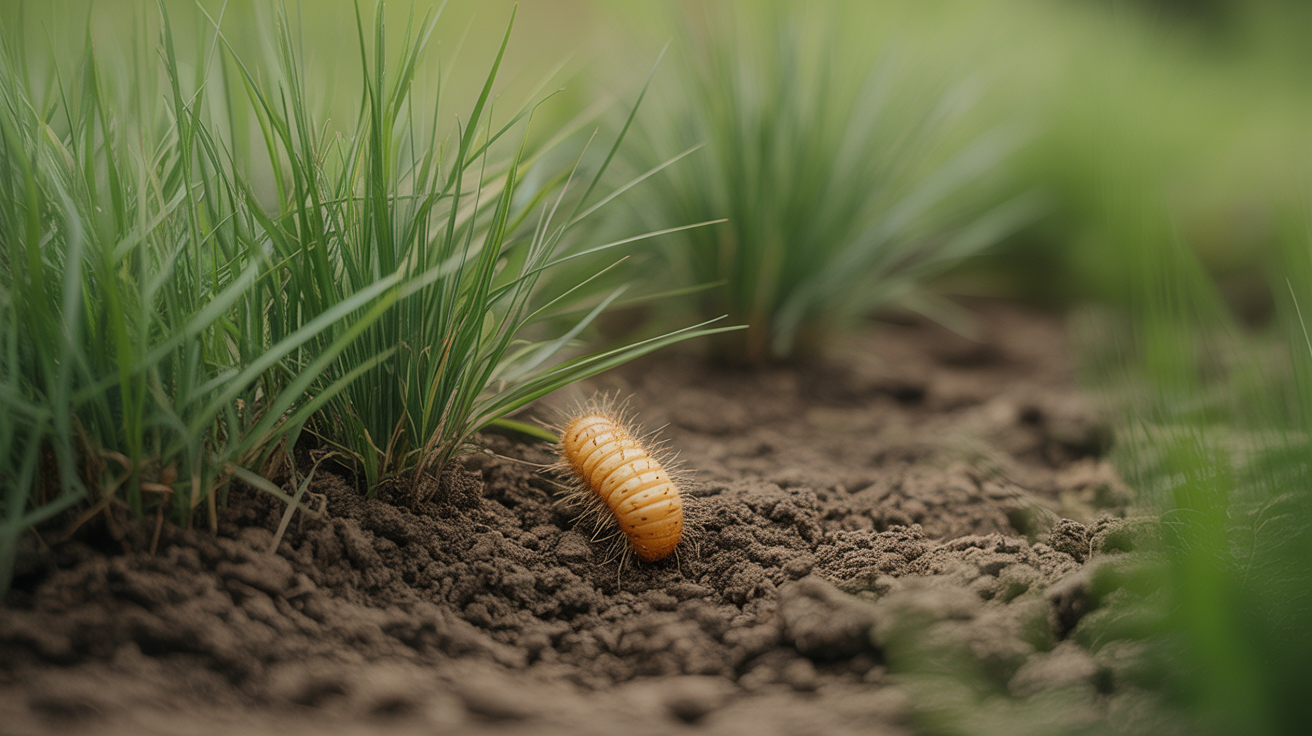
Lawn grubs are one of the more frustrating problems a home lawn owner faces because the damage often looks like drought stress right up until you find the cause hiding an inch below the surface. The fix is straightforward once you know what you are dealing with and when to act. Here is what to look for and how to treat it.
What Are Lawn Grubs
White grubs in soil are the larval stage of several beetle species. Japanese beetles, masked chafers, European chafers, and June bugs are the most common culprits depending on where you live. The adults lay eggs in turf during midsummer, and the eggs hatch into c-shaped, cream-white larvae with tan heads. Those larvae feed on grass roots from late summer through fall, then go deeper to overwinter, come back up in spring for a brief second feeding, and eventually pupate into adult beetles.
The feeding happens underground, so the grass above looks fine until the root damage is severe enough to cause wilting. By the time a large patch turns brown, the population underneath can be dense.
Signs of Grubs in Lawn
You do not always need to dig to suspect a problem. These signs of grubs in lawn are worth watching for during late summer and early fall:
- Spongy turf that peels back. Grubs sever roots near the soil surface. If you can roll a section of dead or dying turf back like a loose rug, grubs are usually the cause.
- Brown patches that do not respond to watering. Drought stress recovers after a good rain. Root-damaged turf stays brown regardless of moisture.
- Bird and wildlife activity. Skunks, raccoons, and starlings dig for grubs at night. If you are finding small conical holes or larger dug-up patches in the morning, something is eating from below.
- Irregular dead patches expanding from late August onward. Cool-season grasses often show damage in August and September when larval feeding peaks.
To confirm, cut three or four square-foot sections of turf about 3 inches deep in the affected area and count the grubs you find. A threshold of 10 or more per square foot generally warrants treatment on most cool-season lawns. Warm-season grasses like bermuda and zoysia tolerate somewhat higher populations before showing visible damage because their root systems regenerate quickly. Your local cooperative extension office can give you the right threshold for your grass type and region.
Grub Control Timing
Timing matters more than product selection. Grub control timing breaks into two windows with different goals.
Preventive treatment (late spring to midsummer). Products containing imidacloprid, chlorantraniliprole, or thiamethoxam are applied before eggs hatch. Chlorantraniliprole is the most forgiving of the two timing windows and is generally considered lower risk to bees when applied correctly and watered in promptly. These systemic products need to move down to the root zone before larvae hatch, so apply them according to the label timing for your region, usually May through July depending on beetle flight patterns. Always water in as directed on the label.
Curative treatment (mid to late summer). If you missed the preventive window and already have grubs actively feeding, trichlorfon and carbaryl are labeled for curative use. These work best on young, actively feeding larvae in August and early September. They are less effective once larvae mature and move deeper in fall. Neither performs well in cool soil, so curative treatments applied after mid-October rarely give satisfying results.
Biological options exist as well. Heterorhabditis bacteriophora is a beneficial nematode that parasitizes grubs and works best when soil is moist and temperatures are above 60 degrees Fahrenheit. Milky spore (Bacillus popilliae) is sometimes recommended for Japanese beetle grubs specifically, but research from land-grant universities has been mixed on its effectiveness in northern climates where other grub species are also present. These options take longer to show results and require specific soil conditions, but they are worth considering if you prefer to minimize synthetic pesticide use.
A note on application: always read the product label before you open the bag or bottle. Labels carry legally binding directions, and the directions on grub products vary by active ingredient, grass type, and geographic region.
How to Get Rid of Lawn Grubs
Once you have confirmed the infestation and chosen a product appropriate for your timing window, the treatment process itself is not complicated.
- Mow first. A freshly mowed lawn gives granular products better soil contact and makes irrigation more effective.
- Apply evenly. Use a broadcast or drop spreader for granular formulations. Calibrate it to the rate on the label, not a general setting. Uneven application leaves patches undertreated.
- Water immediately and thoroughly. Most grub products require at least half an inch of irrigation within 24 hours of application. Without water, granules sit on the surface and the active ingredient never reaches the root zone where larvae feed. This step is not optional.
- Keep irrigation up for two weeks. Dry soil slows the movement of systemic products. If you are in a dry stretch, plan to supplement with your irrigation system.
- Reseed damaged areas. Grub treatment stops the damage but does not regrow the grass. Once the population is under control, overseed thin or bare patches. If your damage appeared in late summer, early fall is a good window for cool-season grass repair. For warm-season lawns, wait until the following spring. You can read more about timing seed applications in our guide to pre-emergent vs post-emergent weed control explained, which covers how to coordinate reseeding around other lawn treatments.
Reducing Future Grub Pressure
A few practices make your lawn less attractive to egg-laying beetles and more resilient to whatever larvae do establish.
Avoid overwatering in midsummer. Adult beetles prefer to lay eggs in moist soil. Letting your lawn dry out slightly between watering cycles during peak beetle flight (typically late June through July in most of the northern US) makes your yard a less appealing target. This does not eliminate grubs, but it can reduce population size.
Raise your mowing height. Taller turf shades the soil surface, which adult beetles also find less hospitable for egg-laying. If you are cutting cool-season grass shorter than 3 inches in summer, raising the deck can help on multiple fronts. Dense, healthy turf also competes better with surface weeds like crabgrass; see our piece on how to identify and get rid of crabgrass for more on keeping thin turf from turning into an open invitation for other problems.
Build soil organic matter. Roots in biologically active soil recover faster from moderate grub feeding than roots in compacted, nutrient-poor soil. Annual topdressing with compost and avoiding compaction keeps root systems deep enough to shrug off lower population levels.
Consider a preventive treatment schedule. If you have had grub problems two or three years in a row, a preventive application timed to your local beetle flight makes more sense than reacting to damage each August. Pairing that with good fertility practices gives you the best chance of staying ahead of the problem. Our broader guide on how to get rid of clover in the lawn touches on how soil fertility adjustments can reduce several lawn pest and weed pressures at once.
Quick Reference: Grub Treatment at a Glance
| Situation | Product Type | Best Timing |
|---|---|---|
| No current damage, want to prevent | Preventive (imidacloprid, chlorantraniliprole) | Late spring to early July |
| Active damage, young larvae | Curative (trichlorfon, carbaryl) | August to mid-September |
| Prefer non-synthetic | Beneficial nematodes (H. bacteriophora) | Late summer, soil moist and warm |
| Long-term Japanese beetle reduction | Milky spore | Variable; check extension guidance |
Results vary by region, soil type, and species present. Confirm grub species with your local extension service if you are unsure which beetle is responsible.
Frequently Asked Questions
How many grubs per square foot is a problem? The general threshold for most cool-season lawns is around 10 grubs per square foot before treatment is clearly warranted. Warm-season grasses often tolerate more before showing damage. Thresholds differ by grass type and region, so check with your state's cooperative extension service for guidance specific to your area.
Can I treat grubs in fall? You can, but results are limited. By mid-October, larvae in most regions have moved deeper into the soil where they are less vulnerable. Curative products work best on young, shallow-feeding larvae in August and early September. If you find grubs in fall and the damage is not severe, it is often more practical to wait and plan a preventive or curative application for the following season.
Will grubs come back after treatment? Treatment controls the current population but does not prevent adult beetles from flying in and laying eggs again the following summer. Lawns with a history of grub damage often benefit from a preventive application each year, particularly during heavy Japanese beetle years in your area.
Are grub treatments safe around pets and children? Safety depends entirely on the specific product, the application rate, and how thoroughly it was watered in. Always read the label for re-entry intervals before allowing children or pets back on the lawn. Most granular products are considered safe once dry and watered in, but the label is the authoritative source, not general guidance.
Is it grubs or drought? The peel-back test is the fastest way to tell. Grab a section of brown turf and pull upward firmly. If the grass peels back easily with no root resistance, suspect grubs. Drought-stressed grass stays rooted even when brown. You can also check the soil by slicing a small section with a spade and looking for the c-shaped white larvae just below the thatch layer.