Yard & Landscaping
Ground Covers for Spots Where Grass Won't Grow
The best ground covers for shade, slopes, and high-traffic gaps where grass struggles, with practical plant picks and planting tips.
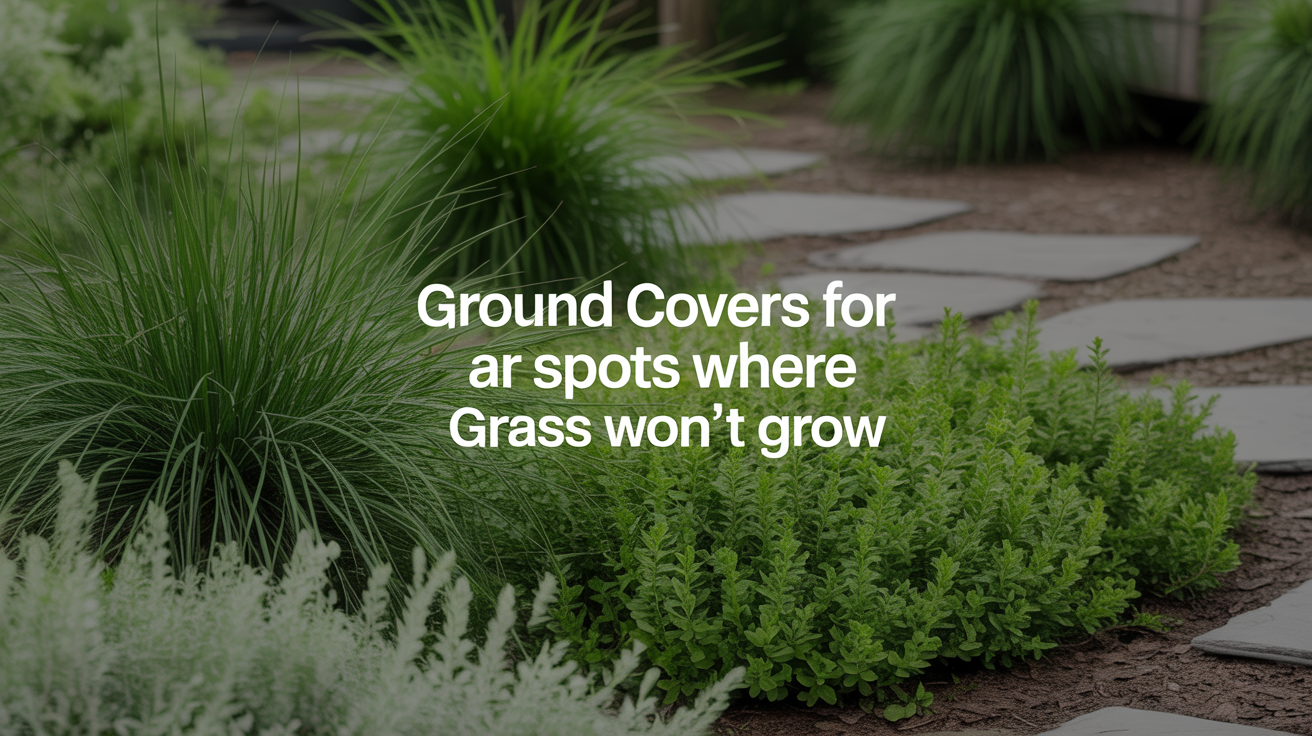
Some corners of a yard seem to fight grass at every turn. The dense shade under a maple, the dry slope along the driveway, the narrow strip between pavers where mower blades can't reach without scalping the turf, these are places where ground cover instead of grass is simply the smarter call. Low-growing ground covers fill these gaps with less watering, less mowing, and often better erosion control than turf grass manages. The result can look deliberately designed rather than perpetually struggling.
Why Grass Fails in Certain Spots
Turfgrass needs a fairly specific combination of conditions to thrive: at least four to six hours of direct sunlight per day, reasonably well-drained soil, consistent moisture, and enough open space for air circulation. Take away any one of those factors and the grass thins, turns patchy, and becomes an ongoing maintenance problem rather than a ground solution.
Heavy shade is the most common culprit. Under established trees, grass competes with surface roots for water and nutrients while receiving too little light to photosynthesize effectively. The soil under dense canopies also tends to dry out unevenly, wet after rain and then bone-dry within days as the tree canopy deflects moisture.
Slopes present a different challenge. Grass can grow on moderate grades, but steep banks are hard to mow safely, and turfgrass roots don't run deep enough to hold loose soil on anything steeper than about 3:1. Water sheets off rather than absorbing, and bare patches quickly erode.
High-traffic zones along paths, between stepping stones, and at gate entries take a pounding that most turfgrasses can't sustain. And in some climates, areas with extremely sandy or rocky soil drain so fast that grass simply dehydrates between waterings.
Knowing which problem you're solving before you plant matters. Shade plants won't handle a sunny, dry slope, and drought-tolerant sedums won't survive regular foot traffic.
Matching Ground Covers to Conditions
Deep or Partial Shade
In spots receiving fewer than four hours of direct sun, you need plants that evolved under a canopy. Pachysandra (Pachysandra terminalis, zones 4–8) is a classic for deep shade under trees, forming a dense, 6-to-10-inch mat of glossy foliage that suppresses weeds effectively once established. It spreads slowly via underground runners but rarely becomes a nuisance in established beds. Note that Japanese pachysandra, while very common, can crowd out native understory plants in woodland edges, the North American native P. procumbens (Allegheny spurge) is a better choice if you're gardening near wild areas.
Hostas aren't often thought of as ground covers, but planted in a mass they function exactly that way, especially on shady slopes. They're durable, come in a wide range of sizes, and their large leaves suppress competing weeds.
For something lower and finer-textured, native sedges (Carex species) deserve more attention. Pennsylvania sedge (Carex pensylvanica) tolerates deep shade and dry conditions, a rare combination, and grows to around six inches with a soft, grass-like appearance. It works as a no mow lawn alternative in shaded yards throughout zones 3–8.
Full Sun and Dry Conditions
Creeping thyme (Thymus serpyllum and related cultivars, zones 4–9) tolerates drought, poor soil, and moderate foot traffic. It stays low (one to three inches), spreads steadily to about 18 inches across per plant, and produces small purple-pink flowers in midsummer that attract pollinators. Plant it in well-drained soil; it rots in waterlogged spots. It handles light foot traffic well and works beautifully between flagstones.
Sedum (particularly Sedum acre and Sedum spurium, zones 3–9) is another strong performer in hot, dry, sunny conditions. Sedums are succulent, which means they store water in their leaves and can handle weeks without rain once established. They spread slowly but form tight mats that need almost no maintenance. Check invasive plant lists for your state before purchasing Sedum acre specifically, as it has naturalized aggressively in parts of the Northeast.
White clover (Trifolium repens, zones 3–10) has seen a revival as a no mow lawn alternative or lawn mix component. It fixes nitrogen, stays green without fertilizer, tolerates moderate drought, and supports bees. It can handle moderate foot traffic but doesn't hold up to heavy use. It does reseed prolifically, which is a feature in some situations and a nuisance in others.
Slopes and Erosion-Prone Areas
Erosion control requires plants with fibrous, spreading root systems that knit soil together. Vinca minor (zones 4–9) is widely used on slopes for this reason. It grows six to eight inches tall, spreads aggressively by runners, and produces lavender-blue flowers in spring. It tolerates shade and sun. The trade-off is that it can become invasive in some regions, particularly the mid-Atlantic and parts of the Midwest, check your local invasive species list before planting, and consider native alternatives like native ginger (Asarum canadense) or wild strawberry (Fragaria virginiana) instead.
Junipers, especially low-spreading varieties like Juniperus horizontalis cultivars (zones 3–9), anchor slopes with woody root systems and provide year-round coverage. They're drought-tolerant once established and require no mowing. Spreads range from four to eight feet depending on cultivar.
Native grasses and grass-like plants, blue oat grass, buffalo grass, blue grama, can stabilize sunny slopes with minimal water once established, and they move attractively in wind rather than looking flat the way hard-scape solutions do.
Light Foot Traffic Areas and Lawn Gaps
For planting between pavers or in stepping-stone gaps, you need something that recovers quickly from compression. Creeping thyme and mazus (Mazus reptans, zones 5–8) both work well. Mazus is especially low (about an inch) and produces small purple flowers in spring. It spreads by stolons and handles light to moderate foot traffic.
Irish moss (Sagina subulata) and Scotch moss (its golden cultivar) form tight, cushion-like mats about an inch tall and spread slowly to fill gaps. They prefer cool, moist conditions and partial shade, they burn out in hot, dry summers in zones above 7.
A Quick Reference Table
| Plant | Light | Water Needs | Foot Traffic | Spread | Zones |
|---|---|---|---|---|---|
| Pachysandra | Deep shade | Low–medium | None | Slow, 12–18 in. | 4–8 |
| Pennsylvania sedge | Shade to part sun | Low | None | Moderate | 3–8 |
| Creeping thyme | Full sun | Low | Light–moderate | 12–18 in. per plant | 4–9 |
| Sedum (low types) | Full sun | Very low | None | Slow | 3–9 |
| White clover | Full sun–part shade | Low | Moderate | Reseeds freely | 3–10 |
| Vinca minor | Shade to full sun | Low | None | Aggressive | 4–9 |
| Mazus | Part shade | Medium | Light–moderate | Moderate | 5–8 |
| Irish/Scotch moss | Part shade | Medium | Light | Slow | 4–7 |
| Creeping Jenny | Shade to part sun | Medium | None | Fast | 3–9 |
| Native sedge (Carex spp.) | Shade to part sun | Low–medium | None | Moderate | Varies |
Planting and Establishing Ground Covers
Establishment is where most ground cover projects succeed or fail. Ground covers go into bare or recently cleared soil, and until they fill in, weeds move in fast.
Start by clearing the area thoroughly. For patches under trees, hand-pull weeds rather than tilling, which disturbs tree roots. Smother persistent weeds with a two-to-three-inch layer of wood chip mulch before planting. Once your ground cover is in, maintain mulch between plants until they spread and close the gaps. The right mulching technique in garden beds applies here too: keep mulch pulled back from plant crowns to prevent rot, and top it off in year two if coverage is still thin.
Space plants according to their spread rate and your patience. Tight spacing (six to nine inches for creeping thyme, 10 to 12 for pachysandra) fills in faster but costs more upfront. Wider spacing (12 to 18 inches) takes an extra season to close but uses fewer plants.
Water consistently during the first growing season. Most ground covers are drought-tolerant at maturity but need regular moisture while they're establishing root systems. After that, irrigation requirements drop sharply for most species.
Edging between a ground cover bed and a lawn is worth doing carefully. Without a clean physical edge, spreading ground covers like vinca or clover migrate into turf and vice versa. A spade-cut edge or a plastic or steel border strip keeps things clean. The same principle that applies to lawn edging for a crisp border works here: a defined line between zones makes both areas look intentional.
If you're transitioning a previously grassed area, building a proper garden bed first, smothering existing grass, amending soil, and setting clear borders, gives your ground cover a much cleaner start than planting directly into struggling turf.
Frequently Asked Questions
Will ground covers choke out weeds on their own?
Eventually, yes, but not immediately. Dense ground covers like pachysandra and vinca outcompete weeds once they've filled in, but in the first year or two, gaps between plants are open invitations. Mulching between plants and hand-pulling early weeds during establishment is necessary. Once a mat is solid, it largely takes care of itself.
Are ground covers actually low maintenance compared to grass?
In established patches, most ground covers require far less maintenance than turfgrass. No mowing, reduced irrigation once established, and minimal fertilizing are the main savings. The trade-off is that the initial planting season requires more attention than overseeding a bare patch with grass. Think of it as front-loading the work.
Can I mix different ground covers in the same area?
It's possible but tricky. Aggressive spreaders like vinca will eventually crowd out slower growers if they share a border without a physical barrier. Mixing species with similar spread rates and conditions, like sedums with creeping thyme, works better. For most situations, a single species per zone is more manageable and looks cleaner.
How do I keep ground covers from spreading where I don't want them?
Annual edging, physical barriers like root guards, and prompt removal of runners that cross into adjacent beds are the main methods. Some species (vinca, creeping Jenny) are vigorous enough that they need attention each spring. Others, like pachysandra, are slow enough that an annual trim at the border is sufficient.
Can I plant ground covers under trees where nothing else grows?
Many ground covers handle dry, rooty shade under trees better than grass does. Pennsylvania sedge, pachysandra, hostas, and native gingers are all good candidates. Avoid planting too close to the trunk and don't pile soil around it, a two-to-three-foot ring of mulch around the base, with ground cover starting where the root zone extends outward, gives both the tree and the plants room to work without competing directly.