Yard & Landscaping
How to Edge a Lawn for a Clean, Crisp Border
Learn how to edge a lawn for sharp, professional-looking borders along walkways and garden beds using the right tools and technique.
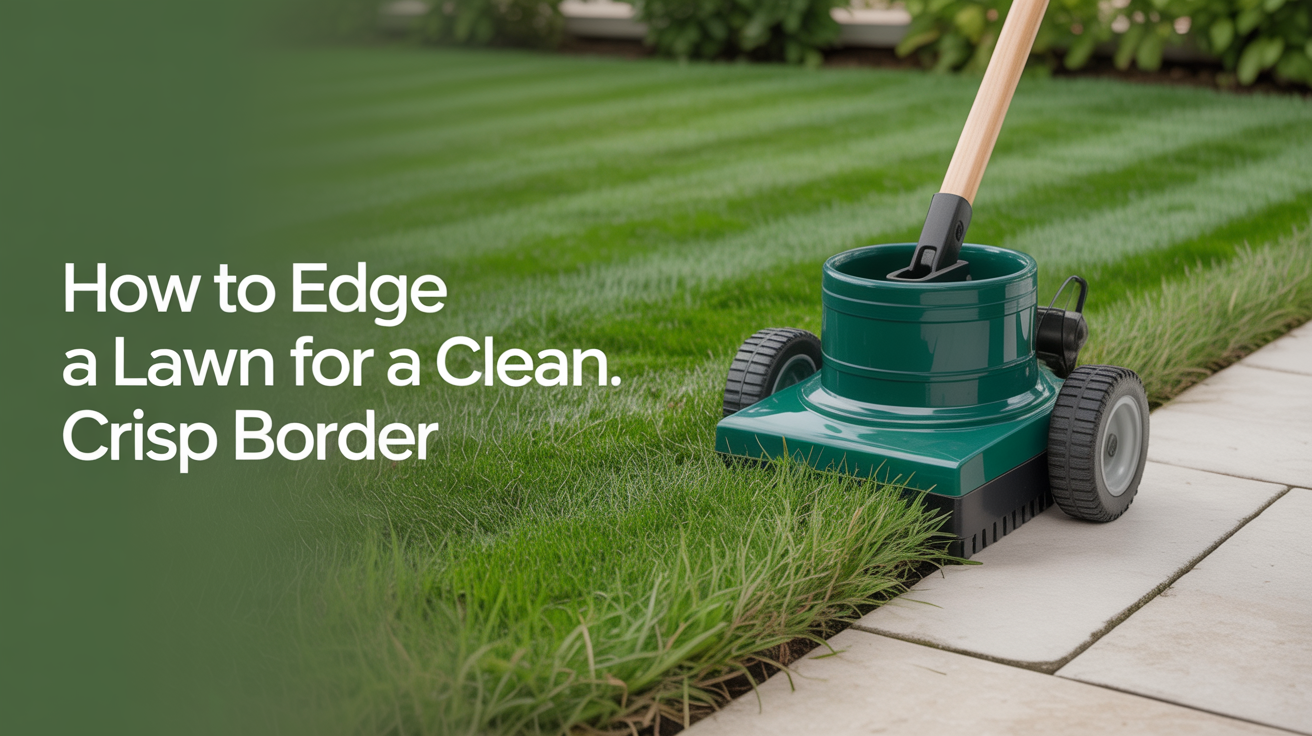
A well-mowed lawn can still look sloppy if grass is creeping over the sidewalk or spilling into the flower beds. Edging defines those borders cleanly, separating turf from pavement, mulch, and soil so each zone looks intentional. You can do it with a manual half-moon edger, a string trimmer held vertically, or a powered stick edger. The right choice depends on how much edge you have and how precise you want to get.
Edging vs. Trimming: Not the Same Job
People often use these terms interchangeably, but they describe two different cuts.
Trimming (or weed-whacking) knocks down grass that the mower deck couldn't reach, like patches along a fence or around a tree base. The trimmer head runs parallel to the ground, cutting the tops of stems.
Edging creates a vertical cut that separates lawn from an adjoining surface. The blade or line drives straight down into the soil or runs along a hard edge to sever roots and rhizomes at the boundary. The result is a defined line, not just shorter grass.
If you skip edging and only trim, the grass might look tidy from a distance, but grass roots will keep advancing into beds and across pavement cracks. Edging once every week or two during the growing season keeps that lateral spread in check.
Choosing Your Edging Tool
Manual Half-Moon Edger
A half-moon edger is a flat, semicircular blade on a long handle. You position the blade on the line you want, then step on the top of the head to drive it straight down about 2 inches into the soil. It takes more effort than a powered tool but gives you excellent control and makes no noise. It's the best option for reestablishing a bed edge that has gotten ragged over multiple seasons, because you can follow a precise curve or straight line at your own pace.
Good for: Garden beds with curves, small yards, homeowners who prefer manual tools.
String Trimmer Turned Vertical
Most homeowners already own a string trimmer, and it doubles as an edger when you rotate the head 90 degrees so the cutting line spins in a vertical plane. Walk along the edge with the line running parallel to the pavement or bed border, about an inch to the inside of where you want the cut. It's faster than a half-moon edger for long straight runs, though it takes some practice to keep the depth consistent.
Good for: Pavement edges, long straight borders, homeowners who want to use one tool for two jobs.
Note: Not all trimmers edge equally well. A curved-shaft trimmer is harder to control vertically than a straight-shaft model. Keep the string at a consistent length (trim it if it gets too long) so the cut stays controlled.
Powered Stick Edger
A dedicated stick edger has a small metal blade that spins in a vertical plane and rides along a guide wheel. You walk forward and the blade cuts a clean slot at the edge. Electric and battery-powered models start easily and are quieter than gas. Gas models handle heavy overgrowth and extended runs without recharging.
Good for: Long driveway and walkway edges, homeowners who want the crispest possible result with the least effort.
Eye protection is required with any powered edger. The blade throws grit, small rocks, and debris at high speed. Safety glasses or a face shield are not optional.
Walk-Behind Edger
These heavier, wheeled machines are essentially lawnmowers with a vertical blade. They're overkill for most residential yards but useful if you have hundreds of feet of pavement edge and want to cover it quickly.
Step-by-Step: Cutting a Fresh Bed Edge
If the border between your lawn and a garden bed has gotten ragged, here's how to reestablish it using a half-moon edger or a spade.
What you'll need:
- Half-moon edger or flat spade
- Garden hose or string line (for marking a curve or straight line)
- Gloves
- Rake or broom to collect clippings
Steps:
- Lay out the line you want to follow. For a gentle curve along a bed, use a garden hose. For a straight line, run a string between two stakes.
- Stand on the lawn side, not the bed side. Position the blade of the half-moon edger on your marked line.
- Drive the blade straight down about 2 inches. Perpendicular cuts create a clean vertical wall that grass won't creep back over as quickly as a shallow angled one.
- Move the blade forward 2 to 3 inches and repeat. Work in small steps rather than trying to cover too much ground per plunge.
- Use the blade or your foot to pop up and remove the crescent-shaped soil plugs as you go.
- Rake or sweep the loose soil and clippings into the bed. You can use it to top-dress the bed, or bag and compost it.
- Once the edge is defined, consider adding mulch to the bed to keep moisture in and the border looking tidy. A 2-to-3-inch mulch layer set back slightly from the edge line helps define the transition visually.
If the bed itself is still being planned, see the guide to how to build and plant a simple garden bed for layout and soil prep advice before you finalize the edge.
Step-by-Step: Edging Along Pavement
Edging a driveway or walkway is a slightly different technique because you're following a hard surface rather than a soil line you've drawn yourself.
What you'll need:
- Powered stick edger or string trimmer (vertical position)
- Safety glasses
- Broom or leaf blower
Steps:
- Put on eye protection before you start the tool.
- Start at one end of the run and position the blade or line about a half-inch to an inch inside the pavement edge, on the grass side.
- Move forward at a slow, steady pace. Rushing leads to a wandering line. Let the tool do the work.
- On a stick edger, the guide wheel rides along the pavement and keeps the blade at a consistent depth (typically 1 to 2 inches). If the wheel drops into a crack, lift the tool slightly to keep the blade from digging too deep.
- If you're using a string trimmer vertically, watch the angle constantly. It's easy to let the head tilt, which creates a beveled cut instead of a clean vertical one.
- After the cut, sweep or blow the loose clippings off the pavement and into the lawn or a bag. Leaving them on the driveway looks messy and they can stain light-colored concrete over time.
Maintaining the Edge Over the Season
An edge that's properly cut once is much easier to maintain than one you're constantly reestablishing from scratch.
Frequency: During peak growing season (spring and early summer), edge every one to two weeks to stay ahead of lateral spread. In late summer when growth slows, every three to four weeks is usually enough.
Depth check: Each maintenance pass only needs to cut 1 inch or so. If you find yourself needing to go much deeper, the grass has advanced and you'll need a more thorough reset pass.
After heavy rain: Grass roots spread faster when soil is soft and wet. Edging a day or two after a soaking rain, when the ground is moist but not muddy, keeps roots from establishing across the line.
Ground covers as an alternative: Along slopes or areas where mowing is difficult, eliminating the turf-to-bed transition altogether is an option. A planted ground cover removes the need to edge that section entirely. The guide to ground covers for spots where grass won't grow covers low-maintenance options by sun and soil type.
Keeping tools sharp: A dull half-moon edger tears grass rather than slicing it cleanly. File or sharpen the blade at the start of each season. A string trimmer line that's too short or worn produces a similar result.
Frequently Asked Questions
How deep should I cut when edging a lawn?
About 2 inches is the standard target for establishing a new edge, particularly along garden beds. That's deep enough to sever the root runners that would otherwise let grass migrate into the bed. For maintenance cuts on an already-defined edge, 1 inch is usually sufficient. Going much deeper than 2 inches isn't necessary and can disturb the soil more than you need.
Can I use a regular string trimmer for edging, or do I need a separate edger?
A string trimmer works well for pavement edges when you rotate the head to run vertically. The result isn't quite as precise as a dedicated stick edger, but it's perfectly adequate for most residential yards. Where a string trimmer struggles is along curved garden beds where you want to follow a specific soil line, because the line is harder to control at a fixed depth in open soil. For bed edges, a manual half-moon edger gives more consistent results.
How often should I edge my lawn?
Every one to two weeks during active growth periods, which typically means spring through early summer in most climates. As the season progresses and growth slows, you can stretch the interval to three or four weeks. If you skip several weeks during peak growth, you may need to do a deeper reset cut to remove the grass that has crept over the line.
What do I do with the soil and grass clippings after edging?
You have a few options. The easiest is to rake or blow the loose material into the bed and leave it, where it will break down into the soil. If your beds are already well-mulched, bag the clippings and add them to a compost pile. Don't leave them on pavement surfaces for more than a day, especially on wet concrete, since grass can leave stains.
Is edging bad for the lawn?
No. Edging removes only the grass and roots that have grown beyond where you want them. The lawn itself isn't affected. In fact, a defined edge reduces competition between turf grass and garden bed plants, since each has a clear territory. Done consistently, it also reduces the amount of weeding you'll need to do along bed borders.