Lawn Care Basics
How to Stop Yellow Mower Stripes From Showing on Your Lawn
Yellow mower stripes usually trace back to one of four causes. Learn how to spot which one you have and fix it before it becomes real damage.
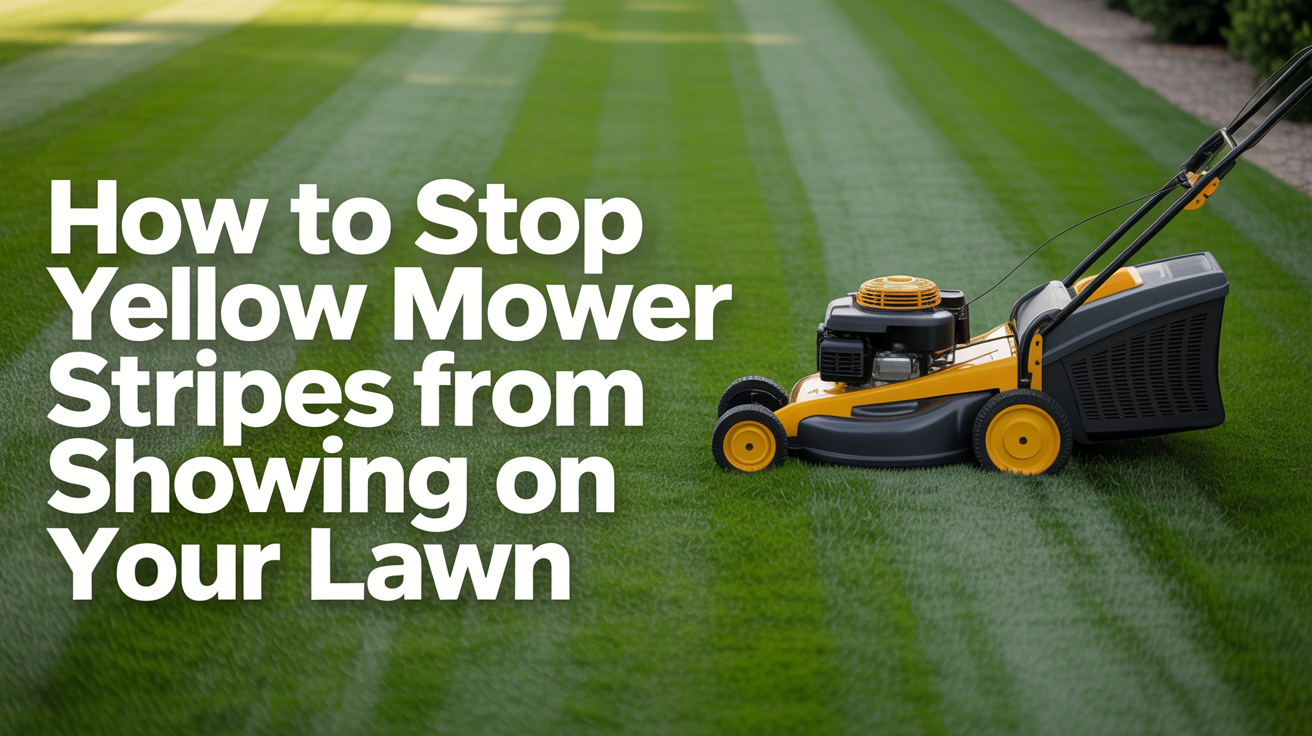
You mowed on a Saturday morning, felt good about it, and then walked back out Monday to find pale or yellow streaks running the length of the yard. Yellow mower stripes lawn problems are one of the most common complaints home mowers deal with, and the frustrating part is that several different issues can produce the exact same look. Before you panic and start dumping fertilizer on the stripes, it helps to know what you're actually looking at.
The good news: most striping is cosmetic and grows out within a week or two. The less good news is that a few causes are early warning signs of real damage, and treating a damage problem like a cosmetic one just lets it get worse. Here's how to tell the difference and fix each one.
The Four Usual Suspects
Almost every case of lawn striping problems comes down to one of these.
Scalping on Uneven Ground
If your yard has gentle dips, mounds, or a slope near a driveway or drainage swale, the mower deck rides level while the ground doesn't. On the high spots, the blade cuts lower than you intended, sometimes down into the pale, sun-starved base of the grass plant or even into stem tissue that doesn't have much chlorophyll. That shows up as a yellow or straw-colored band exactly where the high ground is. This is true scalping, and it's a mechanical problem with the terrain, not a one-time mowing mistake.
A Dull Blade Bruising the Grass
A sharp blade slices the grass tip cleanly. A dull one tears and shreds it, more like ripping a piece of paper than cutting it with scissors. Torn tips brown out or turn a dull gray-yellow within a day or two because the frayed edge dries out fast and loses moisture where a clean cut would seal itself off. From a distance this often looks like uniform yellow-white haze across the whole lawn rather than distinct stripes, but on turf mowed in one direction repeatedly, it can concentrate into stripe-like bands wherever the blade angle was worst.
Deck Shadowing (the Fake-Out)
This one isn't damage at all. Mower decks bend grass blades in the direction of travel as they cut, and where two passes overlap in opposite directions, the grass reflects light differently. One stripe looks dark green because you're seeing the leaf blade's face; the next looks lighter or almost silvery because you're seeing the underside or a more horizontal angle. It's the same effect as vacuum lines in carpet. No damage has occurred. This is the most common cause people mistake for a real problem, and it's also the easiest to rule out (see the check below).
Compacted Wheel Tracks
If you (or a mowing service) run the same wheel path every single time, especially on a lawn that's already prone to compaction, the soil under those tracks gets packed down. Compacted soil holds less air and water, roots struggle, and the grass over those tracks thins out and yellows first under any heat or dry stretch, well before the surrounding turf shows stress. Unlike deck shadowing, this stripe pattern doesn't disappear when you look from a different angle, and it tends to show up worst along the same route every time, often near where you turn the mower around.
How to Tell Which One You Have
You don't need a lab test for this. A short walk and a few minutes settle it in most cases.
- Check from a different angle first. Walk to the opposite side of the lawn and look back at the stripes. If they disappear or reverse (light stripes go dark, dark go light), it's deck shadowing. No fix needed.
- Look at the leaf tip up close. Pull a few blades from a yellow stripe. If the cut end is ragged, frayed, or white and mushy rather than a clean flat cut, your blade is dull.
- Check the ground contour. Kneel down and sight along the stripe. If it follows a rise, dip, or the edge of a drainage swale rather than a straight mowing line, you're looking at scalping.
- Press the soil. If the yellow band feels harder underfoot than the surrounding lawn and lines up with where you always turn or drive the mower, that's compaction.
It's common to have more than one going on. A dull blade on a bumpy lawn will scalp worse than a sharp one would, for example.
Fixing Each Cause
Scalping: Raise the mowing deck one notch, especially for the season and grass type you're growing. For most cool- and warm-season lawns, taller is safer than shorter when the ground isn't perfectly flat; a guide on mowing heights by grass type can help you find the right setting instead of guessing. For persistent low spots, top-dressing with a thin layer of soil over a few seasons will level things out gradually; don't try to fix a dip in one application, since burying too much crown at once can smother the grass.
Dull blade: Sharpen it. A blade used weekly through a full mowing season dulls faster than most people expect, and rocks, sticks, and even sandy soil wear the edge down between sharpenings. If you've never done this yourself, a walkthrough on sharpening and balancing a mower blade covers both the edge and the balance check, which matters just as much: an unbalanced blade vibrates and can shred grass unevenly even after it's freshly sharpened.
Deck shadowing: Nothing to fix, but if the look bothers you, alternate your mowing direction each time you cut (north-south one week, east-west the next, diagonal after that). This also has a real benefit beyond appearance: it prevents the grass from leaning permanently in one direction and reduces the wheel-track compaction problem below.
Compaction: Vary your route so the mower doesn't cross the same ground every time. For tracks that are already compacted, core aeration in the fall or spring (pulling small plugs of soil out rather than just poking holes) relieves the pressure and lets water and air back into the root zone. Watering deeply and infrequently afterward, rather than a light daily sprinkle, encourages roots to grow down past the compacted layer instead of staying shallow.
Watering After a Rough Mow
Whatever the cause, a deep, thorough watering after mowing helps the grass recover faster. This matters more for scalping and blade damage, where the plant has an open wound of sorts and needs to push new growth. Water early in the day so the grass isn't sitting wet overnight, and water deeply enough to reach a few inches down rather than just wetting the surface. This encourages the kind of root growth that makes the lawn more forgiving of the next mowing mistake, too.
Cosmetic Fading vs. Real Damage
Here's the practical distinction. Deck shadowing is never damage; it's a light effect only. Light scalping and light blade bruising are usually cosmetic too, and they fade out over the grass's next growth cycle, typically within a week or so of favorable growing weather, faster in spring and fall, slower in summer heat or drought stress.
Real damage looks different: the yellow deepens to brown or tan rather than greening back up, the grass in the stripe thins out to bare soil instead of recovering, or the same stripe reappears in the same place every single time you mow regardless of direction. That pattern points to scalping down into the crown of the plant (the growing point, just above the soil line) or compaction serious enough that the grass can't recover on its own. If a stripe has gone from yellow to bare dirt, treat it as a repair job. A guide on fixing brown patches and bare spots walks through overseeding and topsoil blends for exactly this kind of localized repair.
Frequently Asked Questions
Why does my lawn look striped in only one direction and normal from another?
That's deck shadowing, and it's not damage. Grass blades bent one way reflect light differently than grass bent the other way. Walk to the far side of the yard and look back; if the light and dark stripes swap places, there's nothing to fix.
How long does it take yellow mower stripes to go away?
Cosmetic causes, like shadowing or light tip bruising from a slightly dull blade, usually green back up within a week under decent growing conditions. Scalping into the crown or established compaction can take several weeks to a full season, since the grass has to regrow rather than just recover in place.
Can a dull mower blade really cause yellow stripes?
Yes. A dull blade tears the grass tip instead of cutting it cleanly, and the frayed edge dries out and browns fast. Since blade angle and overlap vary slightly across the deck, this damage can look like faint stripes rather than an even haze across the whole lawn.
Should I mow in the same direction every time to avoid this?
No, the opposite. Mowing the same direction every time makes deck shadowing more visible and increases the odds of compacting the same wheel tracks. Rotating your mowing direction between cuts is one of the simplest habits for a more even-looking lawn.
Is it safe to fertilize a striped lawn to speed up recovery?
Hold off until you know the cause. Fertilizer won't fix scalping, blade damage, or compaction, and pushing extra growth on stressed turf, especially in hot weather, can do more harm than good. Address the mechanical cause first (blade, deck height, mowing pattern, or aeration), water consistently, and let the grass recover on its own schedule.