Yard & Landscaping
Low-Maintenance Backyard Ideas That Cut Down on Mowing
Practical ways to reduce lawn size and create an easy care backyard with less grass to mow, from ground covers to mulched beds and simple hardscaping.
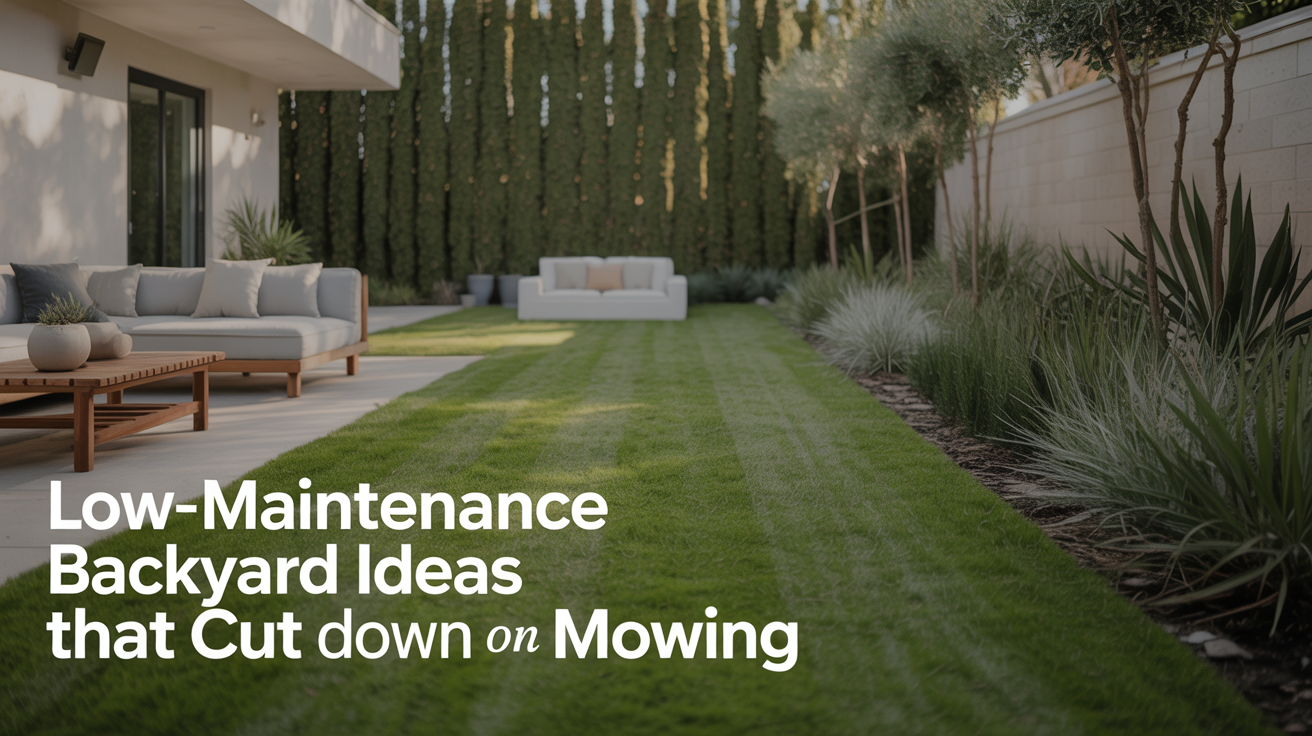
If your Saturday routine is dominated by mowing, edging, and starting it all over again the following week, you are not alone. A large expanse of turf is genuinely demanding. The good news is that you do not have to live with it. There are straightforward, beginner-friendly ways to shrink the grass you manage while still ending up with a backyard you actually enjoy spending time in.
Why a Smaller Lawn Is Easier to Maintain
Turfgrass is one of the most input-heavy plants in a typical yard. It needs regular mowing, consistent watering during dry spells, fertilizing, weed control, and aeration. The more of it you have, the more of each of those tasks you take on.
Reducing your lawn area does not mean replacing grass with bare dirt or a concrete slab. It means substituting some turf with plants, materials, or features that need far less of your time once they are established. Many of those alternatives look better through drought and hard weather than a lawn under stress.
The principle is simple: every square foot that is not grass is a square foot you will never mow again.
Ways to Reduce Your Lawn Size
Expand Your Garden Beds
One of the least expensive ways to take grass out of the picture is to extend existing planting beds outward. Beds along a fence, the back of the house, or around a tree can grow from a narrow strip into a proper planting area with a defined edge.
A wider bed that follows a clean, consistent border is actually easier to maintain than a narrow one, because there is more room for plants to fill in and crowd out weeds. Once the plants establish, a thick canopy of foliage does much of the work for you.
If you are removing grass to expand a bed, cut the sod away cleanly, work in some compost, and then cover the soil with 2 to 3 inches of mulch. That layer suppresses weeds and keeps moisture in during summer. For the specifics of getting mulch right, the guide on how to mulch garden beds the right way is worth reading before you start.
Replace Struggling Patches with Ground Covers
There are spots in most backyards where grass simply does not thrive: heavy shade under trees, dry slopes, areas with compacted soil or foot traffic patterns. These patches become weedy and thin no matter how much effort you put in.
Ground covers are a practical solution. Plants like creeping thyme, clover, ajuga, sedum, or native sedges spread on their own, tolerate the conditions grass cannot, and ask for almost nothing once rooted. The article on ground covers for spots where grass won't grow goes through the options in more detail, including which ones handle shade versus dry sunny slopes.
Add a Path, Patio, or Gravel Area
Hardscaping is the most permanent way to convert lawn to something maintenance-free. A flagstone path through the yard, a small gravel seating area, or a paved patio takes that space off the mowing schedule for good.
You do not need to install a large structure to see a difference. Even a modest pathway of stepping stones through an area you used to mow around saves time each week and adds definition to the space. Gravel mulched areas work well around sheds, along fences, or in utility corners where grass always looks scrappy anyway.
Plant Choices That Stay Manageable
If you are replacing turf with planted areas, the plants you choose matter almost as much as the square footage. A bed full of plants that need deadheading, staking, dividing, and spraying every year is a different kind of work but still work. Low-maintenance landscaping works best when you select plants suited to your region and soil without much help from you.
A few general principles:
- Native plants and locally adapted species tend to establish quickly and handle your climate's dry periods or cold snaps without supplemental watering once rooted.
- Woody shrubs and ornamental grasses fill space without needing division or replanting every few seasons.
- Spreading ground covers close canopy over the soil, which means less weeding over time compared to bare-soil annual beds.
- Bulbs pop up each spring with no intervention and do not need deadheading unless you prefer a tidy look.
Check with your local cooperative extension service for specific plant lists suited to your region. What grows effortlessly in a humid mid-Atlantic yard will struggle in a dry Rocky Mountain climate and vice versa.
A Quick Comparison: High-Maintenance vs. Low-Maintenance Options
| Area of the Yard | High-Maintenance Option | Lower-Maintenance Swap |
|---|---|---|
| Back fence line | Turf up to the fence | Wide mulched bed with shrubs |
| Under a shade tree | Struggling thin grass | Ground cover or wood-chip circle |
| Side yard path | Mown grass strip | Gravel or stepping stones |
| Sunny slope | Lawn that browns in drought | Native meadow grasses or creeping thyme |
| Around the shed | Grass that needs trimming | Gravel mulch or flagstone |
| Central yard | Full turf | Smaller turf panel, beds on perimeter |
Managing What Lawn You Decide to Keep
Going low maintenance does not have to mean eliminating all the grass. A smaller, well-maintained lawn can still be a usable part of the yard for kids, dogs, or outdoor furniture. The difference is keeping it to the size you can actually care for without the routine taking over your weekends.
A few habits that make the remaining lawn easier:
Mow at the right height. Cool-season grasses like fescue and bluegrass generally do better at 3 to 4 inches. Warm-season grasses like bermuda and zoysia are usually kept shorter, around 1.5 to 2 inches. Taller grass shades the soil, holds moisture longer, and competes better with weeds.
Let it go a little in summer. Warm-season lawns naturally slow down in extreme heat. Mowing less frequently during a heat wave is not neglect; it is working with the grass rather than against it.
Keep the edges clean. A defined edge between turf and a bed makes the whole yard read as intentional, even if the lawn itself is modest in size.
Water less, but deeper. Long, infrequent watering encourages roots to go deeper, which means the grass handles dry spells without needing a drink every other day. About an inch per week, adjusted for rainfall, is a reasonable general benchmark, though local conditions vary.
Frequently Asked Questions
How much of my lawn can I realistically convert without it looking unfinished? There is no fixed percentage. The key is having each area look intentional rather than abandoned. A mulched bed with plants, a gravel area with a defined edge, or a ground cover patch that fills in solidly all read as planned choices. It is the half-finished patches with bare soil and no planting that tend to look like work in progress. Start with one problem area, get it established, and expand from there.
Will ground covers actually crowd out weeds, or will I just have a different weeding problem? Dense ground covers do eventually suppress weeds once they fill in, but the first season or two requires some weeding until coverage closes. Mulching between young plants during establishment cuts that work considerably. Spreading types like creeping thyme or ajuga close in faster when planted 6 to 8 inches apart rather than at wider spacing.
What is the easiest hardscaping option for a beginner with no construction experience? Loose gravel on landscape fabric is probably the simplest. You cut or smother the grass, roll out the fabric, spread gravel 2 to 3 inches deep, and edge it with metal or plastic edging to keep the gravel contained. The result is permanent, requires no mortar or heavy tools, and drains naturally. Stepping stones set into the ground are also beginner-friendly for paths.
I have a dog that uses the backyard. How does this change what I can do? Dogs tend to follow the same routes repeatedly, which kills grass along those paths and opens them up to weeds. Those worn routes are good candidates for a gravel or stone path, which holds up to traffic better than turf anyway. Avoid planting ground covers or beds along fence lines dogs run; the foot traffic will usually beat any plant. Keeping a section of durable turf or a mulched play zone for the dog while converting quieter corners to lower-maintenance options is a practical split.
Is low-maintenance landscaping good for pollinators? Often yes, especially if you replace turf with flowering ground covers, native plants, or a small pollinator bed. Clover in particular is an excellent pollinator plant and very low care once established. A yard with some intentional flowering plants and fewer chemical inputs tends to support more insect life than a heavily managed monoculture lawn. Your local extension service can suggest regionally appropriate flowering plants that benefit local bee and butterfly populations.