Tools & Equipment
Electric vs Gas Lawn Mowers: How to Choose
Battery mowers handle most yards with less hassle. Gas still wins for large lots and tough conditions. Here's how to pick the right one.
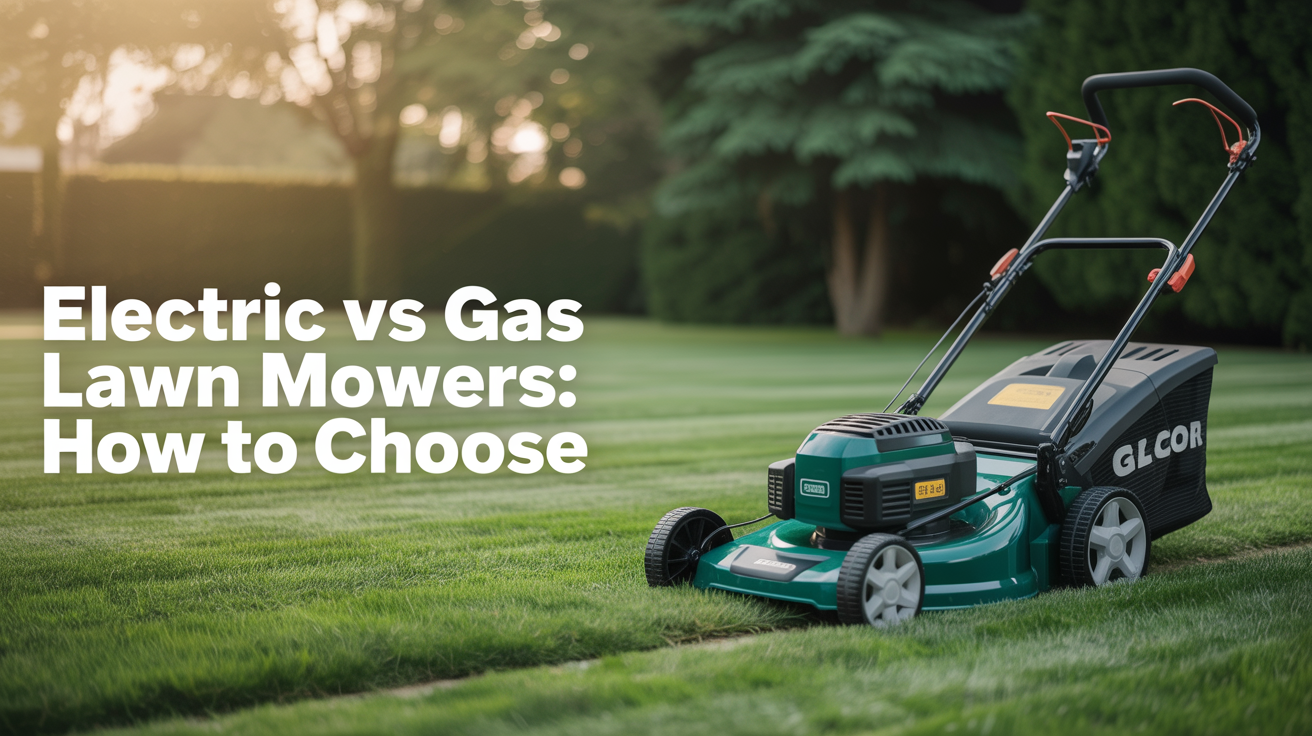
If you have a yard under half an acre and want a machine you can grab, start, and use without much fuss, a battery-powered mower is probably the right call. If your lawn runs larger, grows fast, or stays damp most mornings, a gas mower still holds real advantages that newer electric models haven't fully closed. The honest answer depends on four things: yard size, grass conditions, how much you want to spend upfront, and how much maintenance you're willing to do.
How Battery Mowers Have Changed
Five years ago, recommending a cordless mower for anything beyond a small city lot felt like a stretch. The batteries were underpowered, the run times short, and the cutting decks mostly 16-inch units that struggled in anything thicker than fine fescue. That's no longer where the category sits.
Current 40V to 80V platforms deliver enough torque for most residential grasses, including tall fescue and St. Augustine, and the cutting decks now run 19 to 21 inches, matching what you'd find on a standard push gas mower. A 6.0 Ah battery on a 60V platform gives you roughly 45 to 60 minutes of continuous run time, which covers most lawns under a third of an acre comfortably. Some dual-battery models push that closer to 90 minutes.
The bigger shift is in the ecosystem. The battery you charge your mower with is often the same one that powers your trimmer, blower, and chainsaw. If you're already invested in a particular voltage platform, adding a mower costs less than buying a standalone gas unit because you're sharing batteries across tools.
Brushless motors have made a meaningful difference too. They run cooler, last longer between service intervals, and provide better load response when you hit a thick patch, so the blade speed holds more consistently than with brushed motors from earlier generations.
Where Gas Still Makes Sense
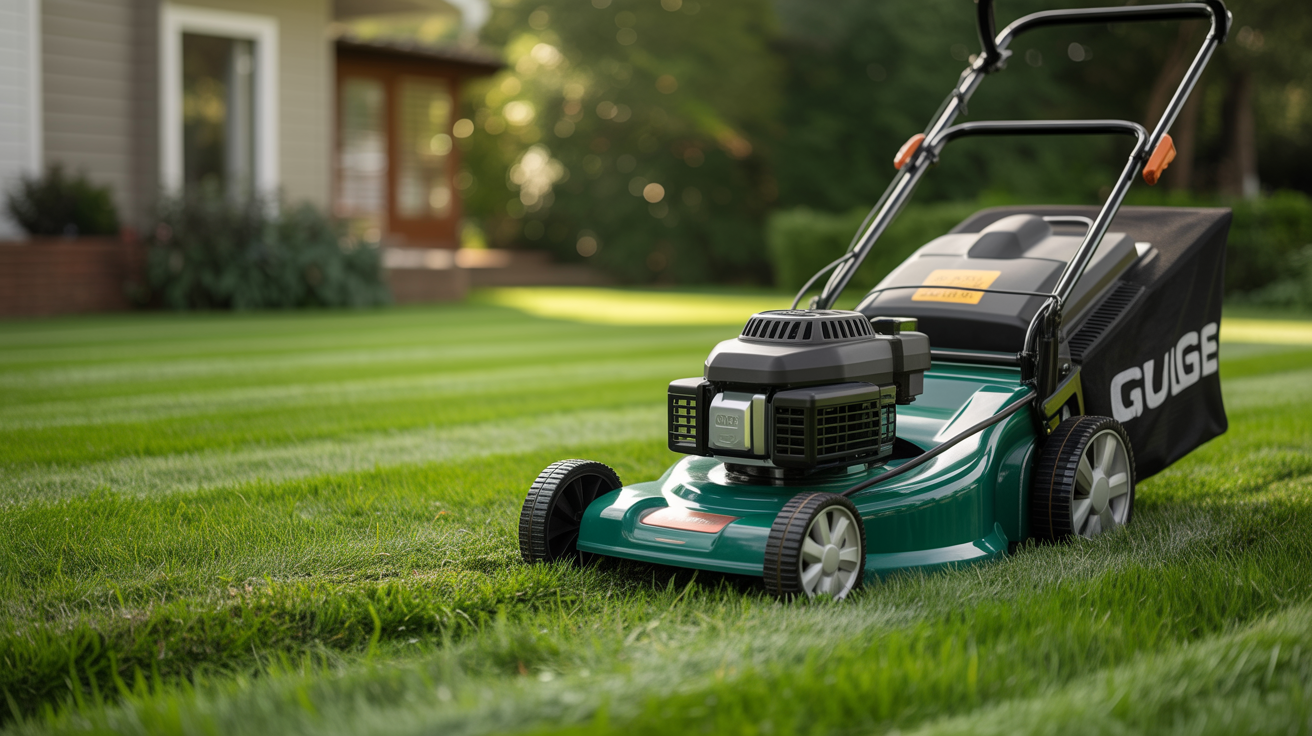
There's a reason gas-powered push mowers and self-propelled models still dominate commercial and large-residential markets. They don't run out of charge mid-yard, they produce consistent power regardless of battery temperature, and they cost less per unit of cutting capacity at the high end.
For yards above half an acre, a single battery charge often isn't enough. You can add a second battery and swap mid-mow, but that's an interruption most people find annoying, and a spare battery for a premium platform typically runs $80 to $150. A gas mower's equivalent "backup" is a two-minute trip to the garage for more fuel.
Wet or tall grass is the other situation where gas holds an edge. Electric motors can bog down when the blade encounters dense, damp material, especially on decks sized 21 inches or smaller. A 163cc to 190cc gas engine with a high-lift blade moves air more aggressively under the deck and is less prone to that hesitation. If you mow only every two weeks, or your lawn grows vigorously in spring, gas handles the load more predictably.
The same applies to slopes. Self-propelled electric models exist and work fine on moderate grades, but gas self-propelled mowers with rear-wheel drive have a longer track record on terrain above 15 degrees.
See push, self-propelled, or riding: choosing the right mower if you're also deciding between drive types before settling on a power source.
Comparing the Two Side by Side
| Feature | Battery / Electric | Gas |
|---|---|---|
| Run time | 40–90 min per charge (varies by battery) | Unlimited (add fuel as needed) |
| Maintenance | Minimal: clean deck, check blade | Oil changes, air filter, spark plug, fuel system |
| Noise level | 75–85 dB (similar to a conversation at 3 feet) | 90–100 dB (hearing protection often recommended) |
| Upfront cost | $300–$700 for push; $500–$1,000 self-propelled | $250–$500 for push; $350–$900 self-propelled |
| Best yard size | Up to 0.5 acre (1 battery); up to 1 acre (2 batteries) | 0.25 acre and up; ideal above 0.5 acre |
A few notes on that table. The noise gap is real and matters if you mow early, live in a dense neighborhood, or have young children napping nearby. Electric mowers are quieter than gas by 10 to 20 decibels, which is a perceptible and significant difference. The upfront cost comparison also deserves a caveat: if you already own batteries in a matching voltage platform, an electric mower can come in well below the gas equivalent in net cost.
Maintenance is where the electric case is strongest on a per-year basis. A gas mower needs fresh oil at least once a season (sometimes twice), a new air filter annually, a spark plug check, and fuel stabilizer if it sits over winter. An electric mower needs a clean deck and a sharp blade. Speaking of blades, both types need the same attention there: sharpening and balancing the blade once or twice a season keeps the cut clean and reduces stress on the motor or engine.
Matching the Right Mower to Your Yard
Matching yard size to power source is the simplest framework for most buyers.
Under 0.25 acre (roughly 10,000 sq ft): A corded electric or a 40V battery mower handles this with capacity to spare. Run time isn't a concern, and the lower upfront cost makes sense here.
0.25 to 0.5 acre: The sweet spot for cordless mowers. A 60V or 80V platform with a 5.0 Ah or larger battery covers this in a single charge. Self-propelled makes sense if your terrain isn't flat.
0.5 to 1 acre: Gas becomes more practical here, though a dual-battery electric mower or a rider is an option. Consider how consistent your mowing schedule is. If you cut every week in a predictable pattern, two batteries work fine. If you skip weeks and tackle heavy growth, gas is more forgiving.
Above 1 acre: Gas push or self-propelled, or a riding mower. The economics and logistics of battery-powered mowing at this scale don't favor electric yet.
Grass type matters too. Cool-season grasses (Kentucky bluegrass, tall fescue) mowed at 3 to 4 inches put less strain on any motor than warm-season grasses (Bermuda, zoysia) mowed at 1.5 to 2 inches, where the blade passes closer to the soil and encounters more resistance and occasional scalping loads.
A Note on Cost Over Time
The upfront price comparison slightly favors gas on entry-level models, but the gap narrows over three to five years when you factor in consumables. A gas mower that burns 1 to 1.5 gallons per mow across a 25-week season costs $60 to $110 in fuel annually at current prices, plus $30 to $60 in oil, filters, and plugs. An electric mower's electricity cost for the same schedule runs $10 to $20 per year depending on local rates.
Battery replacement is the main long-term cost for electric, and it's not trivial. A quality replacement battery for a premium platform runs $80 to $150. Most lithium-ion batteries used in mowers are rated for 500 to 1,000 charge cycles. At one to two charges per week over a mowing season, that's several years before replacement becomes likely.
If you're applying lawn treatments on a schedule, that's worth considering alongside equipment costs. A broadcast spreader used for fertilizer or seed treatment doesn't care which mower you own, but the two tasks are often done the same week, and understanding your lawn's total time demands helps you plan equipment that suits your routine.
Frequently Asked Questions
Are electric mowers as powerful as gas?
For most residential lawns, yes. Modern 60V and 80V battery mowers produce torque output comparable to 140cc to 163cc gas engines. The difference shows up in sustained heavy-load scenarios like very tall or wet grass, where gas maintains blade speed more consistently. For normal weekly mowing on typical residential turf, the power difference is minimal.
How long does a battery mower's charge last?
It depends on battery capacity (measured in amp-hours) and voltage, grass density, and walking speed. A 60V, 5.0 Ah battery typically delivers 40 to 55 minutes of mowing time on flat ground with moderate growth. A 7.5 Ah battery on the same platform adds 20 to 30 minutes. Thick or damp grass drains charge faster.
Can a battery mower handle a half-acre lawn?
Most half-acre lawns (roughly 21,000 sq ft of actual mowable turf after subtracting beds and structures) fall within the range of a 60V or 80V mower with a 6.0 Ah or larger battery. If your lawn is a full half acre of open grass with no obstacles to slow you down, carrying a spare battery is a practical precaution, especially early in the season when growth is heaviest.
Is it worth switching from gas to electric?
If you're replacing a worn-out gas mower and your lawn is under a half acre, switching makes sense for most people. The maintenance reduction alone saves time every season. If you're already invested in a battery platform for other outdoor tools, the case is even clearer. If your lawn is large, heavily shaded (and therefore slow-draining after rain), or you cut infrequently and deal with tall growth, staying with gas is the more practical choice.
Do I need to winterize a battery mower?
Not in the same way as a gas mower. There's no fuel to stabilize or drain, no carburetor to worry about. The main task is removing the battery and storing it at room temperature (between 50 and 77°F is ideal for lithium-ion longevity), cleaning the deck, and storing the mower in a dry place. Most manufacturers recommend storing the battery at around 30 to 50 percent charge for long-term storage.