Tools & Equipment
How to Winterize Your Lawn Equipment
A plain-English guide to winterizing your lawn mower and other outdoor power tools before cold weather arrives, so they start reliably come spring.
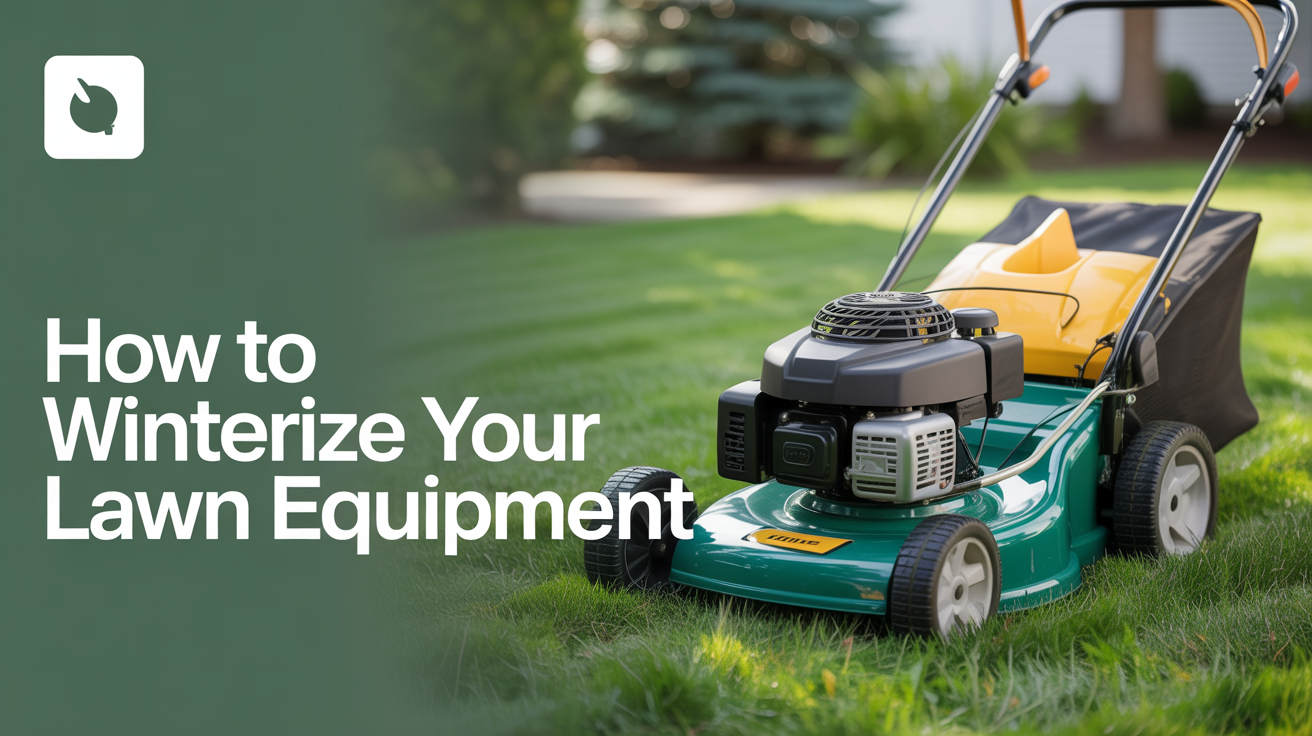
Winterizing a lawn mower takes about 30 to 45 minutes and can save you a frustrating no-start situation next April. The short answer: run or drain the fuel, change the oil, replace the spark plug, clean the deck, and find a dry place to store it. Everything else on this page is the detail behind those five steps.
Why Off-Season Equipment Care Actually Matters
Old fuel is the number-one reason mowers refuse to start in spring. Gasoline begins to degrade in as little as 30 days. Over a long winter, the volatile compounds evaporate and leave behind a sticky varnish that coats the carburetor's tiny passages. A gummed-up carburetor can turn a simple tune-up into a carburetor rebuild or replacement.
Beyond fuel, a few hours of neglect in autumn also means:
- Corrosion on exposed metal parts from condensation cycling through winter
- A dull or nicked blade that makes next season's first mow rougher than it needs to be (see the guide on how to sharpen and balance a mower blade)
- Oil that has collected moisture and combustion byproducts over a full season sitting in the crankcase all winter
None of these problems are expensive to prevent. They can be expensive to ignore.
What You Need Before You Start
Gather supplies first so the job goes in one pass:
- Fresh engine oil (check your owner's manual for the correct viscosity, commonly 10W-30 or SAE 30 for most push and riding mowers)
- A new spark plug (match the part number on the old plug or in the manual)
- Fuel stabilizer, if you plan to leave fuel in the tank
- A drain pan and funnel for old oil
- A stiff brush or scraper and a garden hose for deck cleaning
- Work gloves and safety glasses
If you are also winterizing a string trimmer, leaf blower, or other small-engine tools, the same principles apply. Keep the process the same for all of them so nothing gets skipped.
How to Winterize a Gas Lawn Mower Step by Step
Handle the Fuel First
This is the most important step, so do it before anything else.
Option 1: Run the tank dry. Take the mower out, let it idle until it stalls on its own, then try to restart it once or twice to confirm the carburetor is empty. This leaves nothing to varnish over winter and is the cleanest method.
Option 2: Add a fuel stabilizer mower treatment and top off the tank. Pour the stabilizer into the tank according to the product label, then add fresh fuel to fill the tank close to full (a nearly full tank has less air space and reduces moisture condensation). Run the engine for two or three minutes so the treated fuel works through the carburetor. This approach is common when draining is inconvenient, such as with a riding mower that holds several gallons.
Do not simply leave a half-tank of untreated fuel sitting all winter. That is the scenario most likely to cause a carburetor problem.
Change the Oil
Warm oil drains more completely than cold oil, so run the engine for a couple of minutes before draining if you have not already done so during the fuel step. Then:
- Disconnect the spark plug wire and tuck it away from the plug so the engine cannot accidentally start.
- Tilt the mower (check your manual for the recommended direction, usually with the air filter side up) or use the drain plug if your mower has one.
- Let the old oil drain completely into your pan.
- Refill with fresh oil to the dipstick's full mark.
Used oil contains acids and combustion byproducts that corrode engine parts from the inside. Fresh oil going into storage is a small thing that pays off when you return to the mower in spring.
Replace the Spark Plug
A spark plug is inexpensive, typically a few dollars, and after a full season of use it is worth replacing rather than inspecting and reinstalling. A fresh plug ensures a strong spark on the first pull next year.
Gap the new plug to the specification in your owner's manual before installing it, and tighten it snugly but not overtightened.
Clean the Deck
Reconnect the spark plug wire temporarily only if you need to run the engine again; otherwise leave it disconnected for safety during cleaning.
Tip the mower on its side (again, air filter side up), and use a stiff brush or plastic scraper to remove caked grass clippings from the underside of the deck. Rinse with a hose if needed, but avoid pointing water directly at the air filter or carburetor. Let the deck dry before storage.
Dried clippings trap moisture against the deck metal and accelerate rust. A clean deck also lets you see whether the blade is cracked or bent, which is a good time to address before storing it. If the blade edge is dull, sharpening before storage means the mower is ready to work the moment it comes out in spring.
Lubricate and Inspect Moving Parts
A light pass with a spray lubricant on the wheel axles, height-adjustment levers, and any cables keeps them moving freely and prevents them from seizing over winter. Check the air filter while you have the mower apart; if it is a paper filter and it is heavily discolored or torn, replace it now rather than in spring.
If you are storing a riding mower or a self-propelled model, also check the drive belt for cracks and the tire pressure if applicable.
Battery Storage for Electric and Battery-Powered Mowers
Battery-powered mowers skip the fuel and oil steps entirely, but the battery needs its own attention.
- Store lithium-ion batteries at a partial charge, roughly 40 to 60 percent. A full charge held for months degrades the cells faster than a partial charge does.
- Keep batteries indoors where temperatures stay above freezing. A garage that drops well below freezing in January is not ideal; a basement shelf is better.
- Do not store the battery connected to the mower or the charger for months at a time.
Corded electric mowers mostly just need to be cleaned and stored dry with the cord coiled loosely to avoid kinking.
Where and How to Store Equipment for Winter
A dry, covered space is the main requirement. A garage or garden shed works well. If neither is available, a waterproof tarp over the mower is better than nothing, but condensation can still accumulate underneath, so raise the mower on boards or a pallet if possible to keep the deck off damp concrete.
A few habits that help:
- Store the mower with the blade at a consistent orientation so you remember where it points when you go to remove it next spring.
- Label any small parts you removed, such as a bagging attachment or mulch plug, and keep them with the mower so they are easy to find.
- If you have a gas can in storage, treat that fuel with stabilizer too, or dispose of old fuel responsibly at a local hazardous-waste facility rather than letting it sit.
A Quick Reference: Winterizing Checklist
| Step | Gas Mower | Battery Mower |
|---|---|---|
| Drain or stabilize fuel | Yes | Not applicable |
| Change engine oil | Yes | Not applicable |
| Replace spark plug | Yes | Not applicable |
| Clean the deck | Yes | Yes |
| Remove and store battery | Not applicable | Yes (40-60% charge, indoors) |
| Lubricate cables and levers | Yes | Yes |
| Sharpen or inspect blade | Yes | Yes |
| Store in dry location | Yes | Yes |
Frequently Asked Questions
Do I really need to drain the gas, or can I just add stabilizer?
Either approach works if done correctly. Draining completely is the most reliable method since there is nothing left to degrade. Stabilizer is a good option when draining is inconvenient, particularly with larger tanks, as long as you use it with fresh fuel and run the engine afterward to circulate the treated mixture through the carburetor. The mistake is leaving untreated, partially used fuel sitting in the tank for four to six months.
When should I winterize my mower?
After your last mow of the season, before temperatures consistently drop below freezing in your area. In most of the northern United States, that window is October to early November. In the South where winters are mild, you may mow year-round and skip the full winterizing routine, though an annual service is still worth doing.
What happens if I skip winterizing and just leave the mower in the garage?
The most common outcome is a no-start in spring due to varnished fuel or a fouled carburetor. If the engine does start, it may run roughly, and you may also find that old oil has accelerated wear on internal parts. In some cases, the carburetor needs professional cleaning or replacement, which costs more than a season's worth of routine maintenance.
Can I store my mower outside under a tarp?
It is better than leaving it fully exposed, but not ideal. A tarp traps condensation beneath it, which promotes rust on the deck and corrosion on metal parts. If indoor storage is not possible, raise the mower off the ground and use a ventilated cover rather than a solid plastic tarp.
How do I know if my fuel is still good in the spring?
Fresh gasoline is amber-colored and has a clean smell. Old fuel turns darker, sometimes brownish, and smells stale or sour. If you are unsure, drain the old fuel and start the season with a fresh fill. The cost of a partial tank of fuel is far less than a carburetor repair.
The Lawn Almanac is an independent lawn and garden resource. Our guides are researched and written in-house; we are not affiliated with, endorsed by, or sponsored by any seed, fertilizer, equipment, or chemical brand we mention. Always read and follow the product label, and treat our advice as general guidance rather than a substitute for your local extension service.