Tools & Equipment
Lawn Mower Maintenance: Oil, Air Filter, and Spark Plug
Learn how to change mower oil, clean the air filter, and replace the spark plug. A plain-language tune-up guide for beginner lawn care.
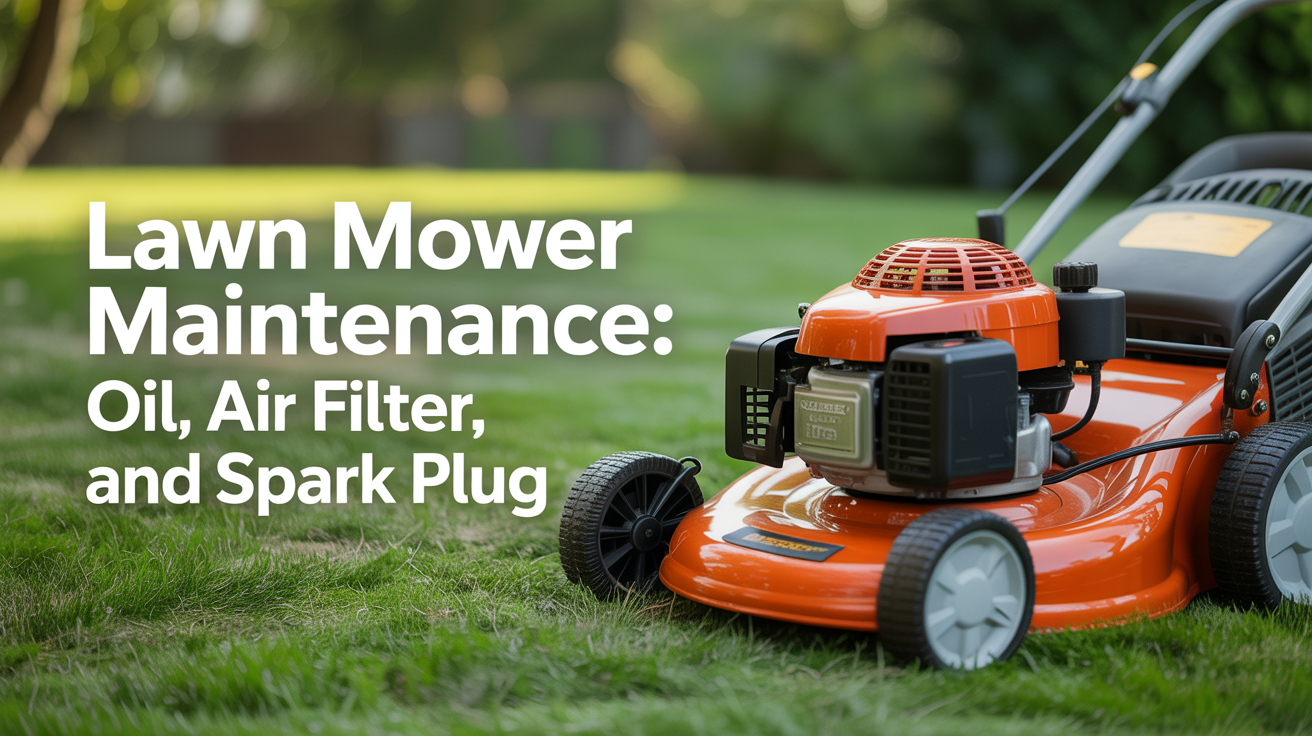
A mower that hesitates to start, runs rough, or blows blue smoke usually needs three things: fresh oil, a clean air filter, and a good spark plug. None of these jobs require a mechanic. You need about an hour, a few basic tools, and the habit of doing it at the start of every season. This guide walks through each step in plain language so you can tune up your mower with confidence.
Why Regular Maintenance Matters
Small engines work hard. A typical gas mower runs at high RPM for thirty to sixty minutes at a stretch, often in dusty, humid air. That wears on oil, clogs filters, and erodes spark plug electrodes faster than most people expect.
Skipping the annual tune-up does not save time. It just trades a one-hour task for an engine that hard-starts, burns more fuel, and eventually costs real money to fix or replace. A well-maintained mower can last fifteen years or more. One that runs on degraded oil and a fouled plug might not make it five.
The three components below are the core of a basic tune-up. If you are comparing mower types and want to understand what you are maintaining, the guides on push vs. self-propelled mowers and electric vs. gas mowers give useful background. Note that electric and battery mowers do not require oil or spark plug changes, so those sections apply to gas engines only.
Safety Before You Start
Always disconnect the spark plug wire before doing any work under the mower or near the blade. This is not optional. On a gas engine, the blade can spin if the engine kicks over accidentally. Pull the rubber boot off the plug and tuck it away from the terminal so it cannot reconnect on its own.
Work on a flat, hard surface. If you need to tip the mower on its side to drain oil, tilt it so the air filter side faces up. This keeps oil from draining into the air filter housing or carburetor, which causes its own set of problems.
Let the engine cool fully before you begin. Hot oil is thin and can splash, and hot engine parts will burn you without warning.
How to Change Mower Oil
What you need: Fresh SAE 30 or 10W-30 motor oil (check your owner's manual for the correct grade), an oil drain pan, a rag, and a turkey baster or small pump if your mower lacks a drain plug.
How often: Once per season, or every fifty hours of run time, whichever comes first. If the oil looks black rather than amber when you pull the dipstick, it is past due.
Steps:
- Run the engine for two or three minutes to warm the oil slightly, then shut it off and disconnect the spark plug wire.
- Place the drain pan under the oil drain plug (usually on the underside of the engine). Remove the plug with a wrench and let the oil drain completely. On mowers without a drain plug, tip the mower toward the oil fill side and drain through the fill tube using a baster or pump.
- Replace the drain plug and torque it snugly. Do not overtighten.
- Add fresh oil slowly through the fill tube. Check the dipstick frequently. Overfilling is as harmful as running low.
- Wipe up any spills, reconnect the spark plug wire, and run the engine briefly to check for leaks around the drain plug.
Used motor oil should be collected and brought to a recycling center or auto parts store. Do not pour it down a drain or into the yard.
How to Clean or Replace the Air Filter
The air filter keeps dust, grass clippings, and debris out of the carburetor. A clogged filter starves the engine of air, which causes hard starting, rough running, and higher fuel consumption.
Two common filter types:
| Filter Type | What It Looks Like | How to Service |
|---|---|---|
| Paper/pleated | White or tan accordion folds | Tap out loose debris, replace if discolored or torn |
| Foam | Orange or gray sponge-like material | Wash with soap and water, let dry fully, re-oil lightly before reinstalling |
Steps:
- With the spark plug disconnected, locate the air filter cover. It is usually a plastic housing on the side of the engine, held by one or two clips or a small bolt.
- Remove the cover and lift out the filter.
- For paper filters: tap the filter gently against a hard surface (not your hand) to knock out loose debris. Hold it up to the light. If the paper is gray throughout, torn, or oil-soaked, replace it. Trying to wash a paper filter destroys it.
- For foam filters: wash in warm soapy water, rinse well, and squeeze dry in a clean rag. Let it air-dry for at least an hour before reinstalling. A light coating of clean motor oil worked in with your fingers before reinstalling helps trap fine particles.
- Check the filter housing for cracks or gaps where unfiltered air could sneak past. Reinstall the clean or new filter and secure the cover.
Replace the air filter at the start of each season, or sooner if you mow in dusty or sandy conditions. Filters are inexpensive, and the cost of a new carburetor is not.
How to Check and Replace the Spark Plug
The spark plug fires the fuel mixture in the cylinder. A fouled or worn plug misfires, making the engine run roughly or fail to start at all.
What you need: A spark plug wrench (most mowers use a 5/8-inch socket), a wire gap tool, a new plug matching your mower's spec (listed in the owner's manual or stamped near the plug).
Steps:
- Disconnect the spark plug wire. Brush any debris away from the plug base so nothing falls into the cylinder when you remove it.
- Remove the plug with the spark plug wrench, turning counterclockwise.
- Examine the electrode (the small metal tip at the bottom). A tan or light gray electrode is healthy. Black, sooty deposits suggest a rich fuel mix or dirty air filter. A white or blistered electrode points to running too hot. Oil fouling means oil is getting into the combustion chamber, which is a separate engine issue to address.
- If the electrode is only lightly discolored, clean it with a wire brush and check the gap with a gap tool. The correct gap is listed in your manual, commonly around 0.030 inches for many small engines.
- If there is any doubt, replace the plug. A new plug costs a few dollars and removes one variable from a hard-starting engine.
- Thread the new plug in by hand first, then snug it with the wrench. Do not overtighten; the threads in an aluminum engine head strip easily.
- Reconnect the spark plug wire firmly.
A useful next step after any tune-up is to check the blade. A dull or unbalanced blade forces the engine to work harder and leaves a ragged cut on your grass. The guide on how to sharpen and balance a mower blade covers that process in full.
Building a Simple Maintenance Schedule
Most beginner lawn owners skip mower maintenance because there is no obvious reminder built into the machine. A simple schedule fixes that.
Start of season (spring):
- Change the oil
- Inspect or replace the air filter
- Replace the spark plug
- Check blade sharpness
- Check tire pressure (if applicable)
- Clean the underside of the deck from last season's buildup
Mid-season (midsummer, if mowing weekly):
- Check oil level with the dipstick
- Inspect the air filter if conditions have been dusty
End of season (fall):
- Drain the fuel or add a fuel stabilizer if storing for more than thirty days
- Run the engine until it stops to clear the carburetor
- Clean the deck
- Note anything that needs replacing before next spring
Storing a mower with stale fuel in the carburetor is one of the most common reasons mowers are hard to start the following spring. It takes five minutes to prevent it.
Frequently Asked Questions
What kind of oil does a lawn mower use? Most four-stroke walk-behind mowers use SAE 30 or 10W-30 motor oil. Check your owner's manual for the recommended grade and capacity. Two-stroke engines (less common now) use a premixed fuel-and-oil blend rather than separate oil changes.
How do I know when my air filter needs replacing? For paper filters, hold it up to daylight. If you cannot see light through the pleats, or the paper is torn or stained with oil, replace it. For foam filters, wash and reuse until the foam becomes brittle, crumbles, or develops tears.
Can I use automotive motor oil in my lawn mower? Standard automotive SAE 30 or 10W-30 non-detergent oil works fine in most small engines. Avoid synthetic blends unless your owner's manual specifically approves them, and do not use high-mileage formulas designed for older car engines.
My mower starts fine but runs rough. Could it be the spark plug? It is one of the first things to check. A fouled plug misfires under load even if it fires well at idle. Replace the plug and see if the rough running clears. If it does not, move on to the carburetor or fuel system.
How long does a tune-up take? On a typical walk-behind mower, changing the oil, servicing the air filter, and replacing the spark plug together takes forty-five minutes to an hour the first time. Once you know where everything is, it often takes less than thirty minutes.